
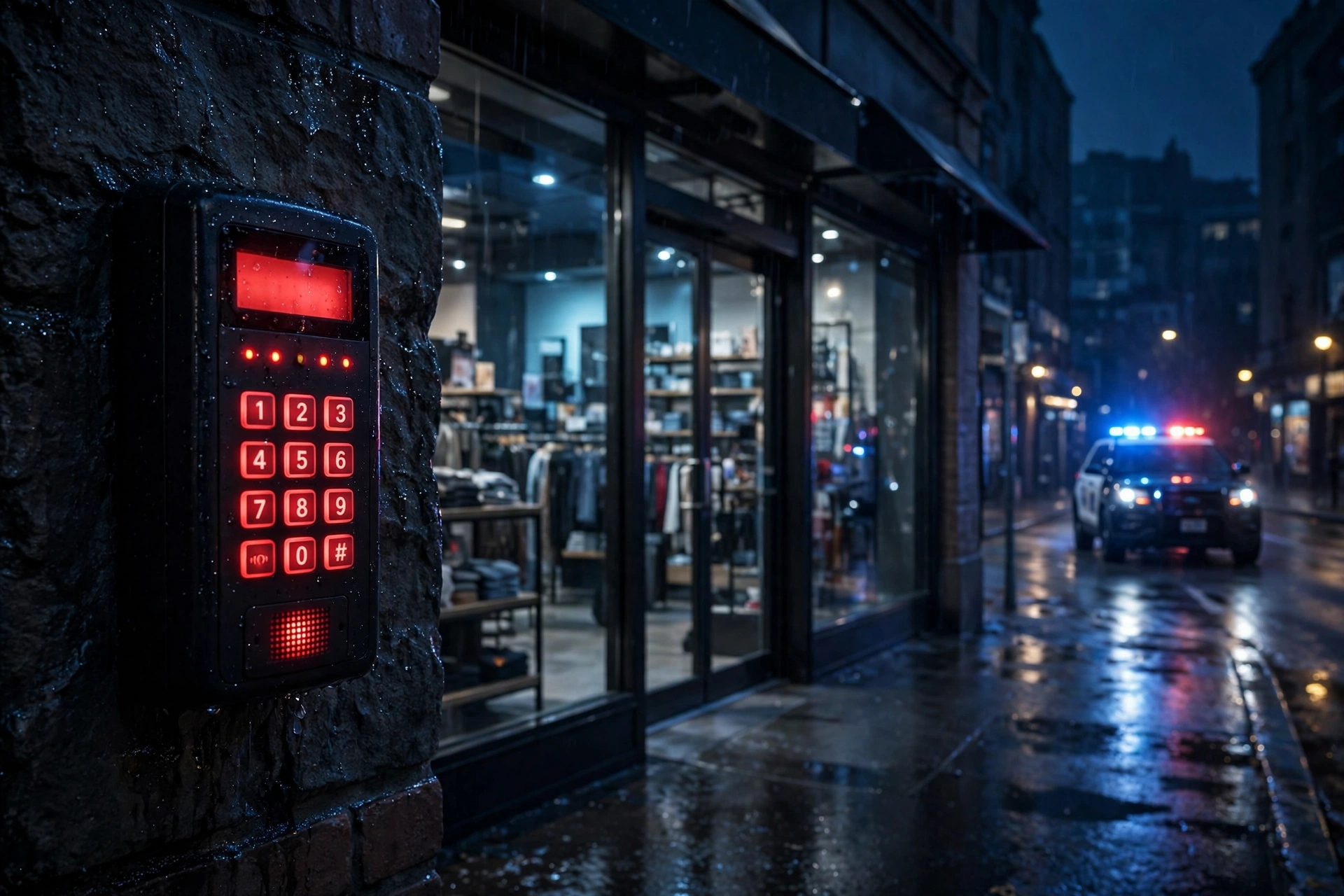
A new Interface Systems report puts hard numbers on alarm failures — and the police non-response risk hiding behind them.
☕ The Afternoon Coffee Break Read
Your alarm goes off at 2 a.m. Nobody’s inside. The police roll, the keyholder gets out of bed, and everyone goes home. Annoying — but how much did that one non-event actually cost you?
Interface Systems published a new report this week, “The Real Cost of Alarm Failure,” and the numbers belong on every LP leader’s desk. Modeling a standard 10-store retailer averaging three false alarms per location per year, the study puts direct municipal fines at just $1,220 annually. That sounds manageable — until you add the costs nobody budgets for: unverified guard dispatches, manager keyholder callouts, and lost labor hours. The real baseline: $7,230 a year, quietly eroding the safety budget.
And that’s the good scenario. Here’s the number that should change your alarm program: in 21 of the 23 major cities analyzed — including Los Angeles, San Francisco, and Houston — police departments now suspend or revoke emergency dispatch privileges for properties that exceed a set number of false alarms. One break-in at a location that has lost its police response pushes the modeled annual exposure for that 10-store operator to $37,230.
The study draws on municipal ordinances and fee schedules across 25 U.S. cities, police dispatch policies in 23 cities, federal labor data, and real vendor repair costs — so these aren’t scare tactics, they’re invoices.
Three practical takeaways:
1. Audit what your alarms cost you, not just whether they work. Pull a year of alarm events per location: false alarm counts, guard dispatches, keyholder callouts, fines paid. Most LP teams have never seen that total in one place.
2. Fix the repeat offenders first. A handful of locations usually generate most false alarms — bad door contacts, motion sensors tripped by HVAC, user error at open and close. Targeted repair beats a blanket service contract.
3. Protect your dispatch privileges like an asset. Know each municipality’s false-alarm ordinance and your locations’ current standing. Verified-response programs and video-verified alarms aren’t just technology upgrades — they’re insurance against the day a real break-in gets no police response.
An alarm that cries wolf doesn’t just waste a night’s sleep. It erodes the one response you actually need when it matters.
Source: Interface Systems, “The Real Cost of Alarm Failure,” 2026 Loss Prevention Research Series, published Oct 8, 2026 — https://www.globenewswire.com/news-release/2026/10/08/3377413/0/en/new-loss-prevention-report-by-interface-systems-exposes-the-hidden-cost-of-commercial-false-alarms.html


Leave a Reply