
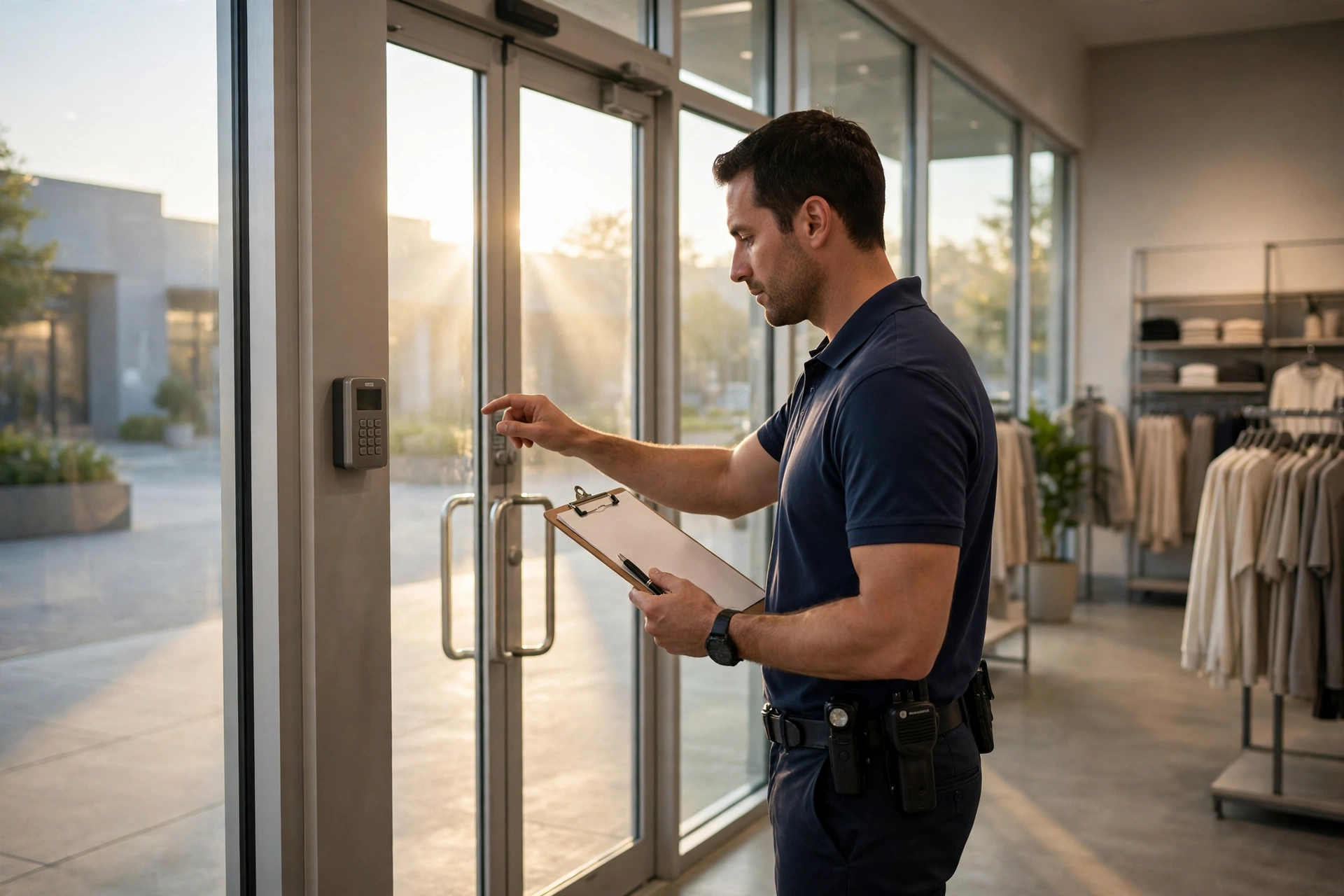
The first fifteen minutes decide whether the store runs tight — or spends the day catching up.
Last week’s closing checklist covered how to end the day without leaving the store exposed. The other end of the day matters just as much. A sloppy opening — alarm not verified, safe not counted, cameras not checked — hands the day’s problems to everyone who walks in after you. A disciplined opening takes about fifteen minutes and pays for itself in shrink avoided and headaches prevented.
1. Verify the alarm and the perimeter before anything else
The first person in should confirm the alarm was set overnight and that it disarmed cleanly, with no overnight events on the log. Walk the exterior before you unlock the front: check for broken glass, pried doors, tampering at the receiving dock, and anything left against the building overnight. A forced entry that happened hours ago is already a loss — but finding it before the store opens means the scene is preserved, the police call is made on your terms, and no customer walks through a crime scene.
2. Count the safe and the tills before the first transaction
The safe count and the till counts from close should be verified against the closing log before any money moves. If a count is off, you want to know it at 8 a.m., with a small pool of people who had access, not at 4 p.m. after a full day of transactions has buried the trail. Count, record, initial. If your store uses dual control on the safe, do not let the morning rush become an excuse to skip it.
3. Check that your cameras and EAS actually work
A quick spot-check of the camera system — a glance at the monitor wall, a confirmation that recording is active on all channels — takes under a minute and catches the failures that matter most: a camera knocked out of position overnight, a DVR that stopped recording, a blind spot created by a moved display. Do the same for the EAS gates. Walk through with a tagged item and confirm the alarm sounds. An EAS system that silently fails is worse than no system at all, because the team keeps assuming it is watching.
4. Sweep the floor for overnight movement
Before the store fills with customers, walk the floor with fresh eyes. Look for fixtures that were moved, merchandise that was relocated, empty packages, and product staged in odd places — restrooms, fitting rooms, behind displays. Offenders and dishonest employees both use the quiet hours and the close of the previous day to stage product for a quick grab later. A five-minute sweep at opening catches what the closing sweep missed.
5. Confirm the day’s risk picture with the team
The opening huddle takes two minutes: who is on the floor, who is covering the front, any known persons to watch for, any deliveries expected, and any incidents from yesterday that carry over. Share the description of anyone who attempted a return fraud or a grab-and-go the day before. A team that starts the day with the same picture is far harder to exploit than five people each working from their own assumptions.
Make it a checklist, not a habit
Habits drift. A written opening checklist — posted, initialled daily, and audited weekly by the manager — is what keeps the routine honest when the store is short-staffed, when a new opener is covering, or when the morning is running late. The goal is not paperwork. It is a store where every day starts with the alarm verified, the money counted, the cameras confirmed, the floor swept, and the team briefed.
Fifteen minutes at open saves hours of investigation later. Open like you mean it.
The day’s shrink is often decided before the first customer walks in. Spend fifteen minutes at open — and make the rest of the day play defence, not catch-up.


Leave a Reply