Counterfeit bills at the register became real money at the return desk — and only a statewide pattern made it visible.
Some return fraud hides the merchandise. This one hid the money. On November 5, 2026, Pennsylvania Attorney General Dave Sunday announced felony charges against four New York men — Fitzroy James, Fabian Coke, Gabriel Young, and Christopher Nicholas — over an alleged scheme built on a simple two-step: buy merchandise with counterfeit cash, then return it and walk out with real money. The men are charged with felony organized retail theft, dealing in proceeds of unlawful activity, conspiracy, and related offenses. Efforts to take them into custody are ongoing, and the charges are allegations — all four are presumed innocent unless proven guilty.
The scale is what should get an LP leader’s attention. According to the Attorney General, the group bought or attempted to buy more than $20,000 worth of merchandise with fake cash and profited at least $12,436 from returns. They allegedly worked stores in 16 Pennsylvania counties — from Allegheny and Bucks to Lancaster, Lebanon, and York — targeting Kohl’s, Target, Home Depot, Lowe’s, and other retailers. Investigators also suspect the group in similar crimes in several other states.
Why this play works
Each half of the scheme looks ordinary on its own. A cashier sees a cash sale. Days later, a service desk sees a customer with merchandise and a receipt, asking for a refund. Neither transaction triggers an alarm by itself — the fraud lives in the gap between them. Spread the activity across 16 counties and several chains, and no single store ever sees enough to call it organized. That is the design: small, plausible transactions that only become a felony case when someone connects them.
Catch it at the register, not the return desk
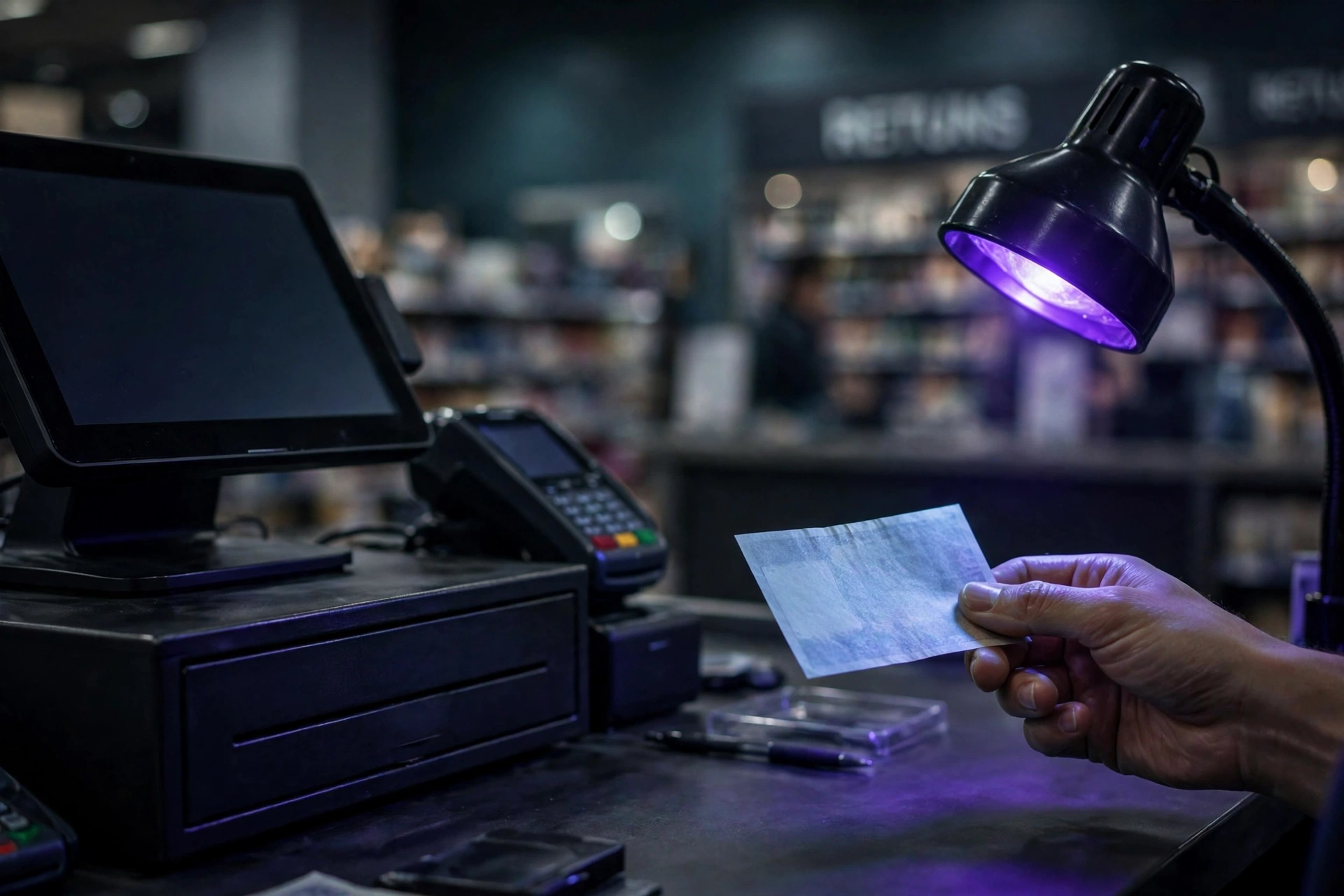
The first control point is the tender itself. Counterfeit-detection pens are widely used and widely over-trusted — they test the paper, not the bill, and modern counterfeits routinely pass them. Train cashiers on the built-in security features of larger denominations: the watermark, the security thread, color-shifting ink. Where volume justifies it, put bill validators or UV verification at lanes that take the most cash. A large cash purchase of easily returned merchandise deserves a few extra seconds of scrutiny before the drawer closes — because once a bad bill is in the drawer, the store has already lost, return or no return.
Connect the purchase to the return
Your POS data already holds the pattern; it just needs to be asked. Exception reporting should flag cash purchases returned for cash within a short window, repeat returners across locations, and the same high-value items cycling through buy-and-return at multiple stores. A return desk working from the receipt alone cannot see any of that. A return desk working from linked transaction data can — and a pattern that spans stores is exactly what turns a refund dispute into an organized retail theft referral.
Small losses, shared fast, become a felony case
This case was built the way these cases usually are: collaboratively. The Attorney General’s Organized Retail Crime Unit worked with the U.S. Secret Service, Pennsylvania State Police, four local police departments, and loss prevention professionals from the retailers involved, with Deputy Attorney General Jenna Strausbaugh prosecuting. None of that happens because of one store’s $300 loss. It happens because LP teams documented, preserved video and transaction records, and shared what they had. Report the pattern, not just the incident.
Source: Pennsylvania Attorney General press release, “AG Sunday’s Organized Retail Crime Unit Charges 4 New York Men with Statewide Fake Cash-Return Scheme in 16 Pa. Counties,” November 5, 2026 — https://www.consumerproductsinthenews.com/article/954779960-ag-sunday-s-organized-retail-crime-unit-charges-4-new-york-men-with-statewide-fake-cash-return-scheme-in-16-pa-counties
A counterfeit bill accepted at the register is a loss the return desk cannot undo. Verify the cash, link the return, and share the pattern — that is how a $300 refund becomes a statewide case.