
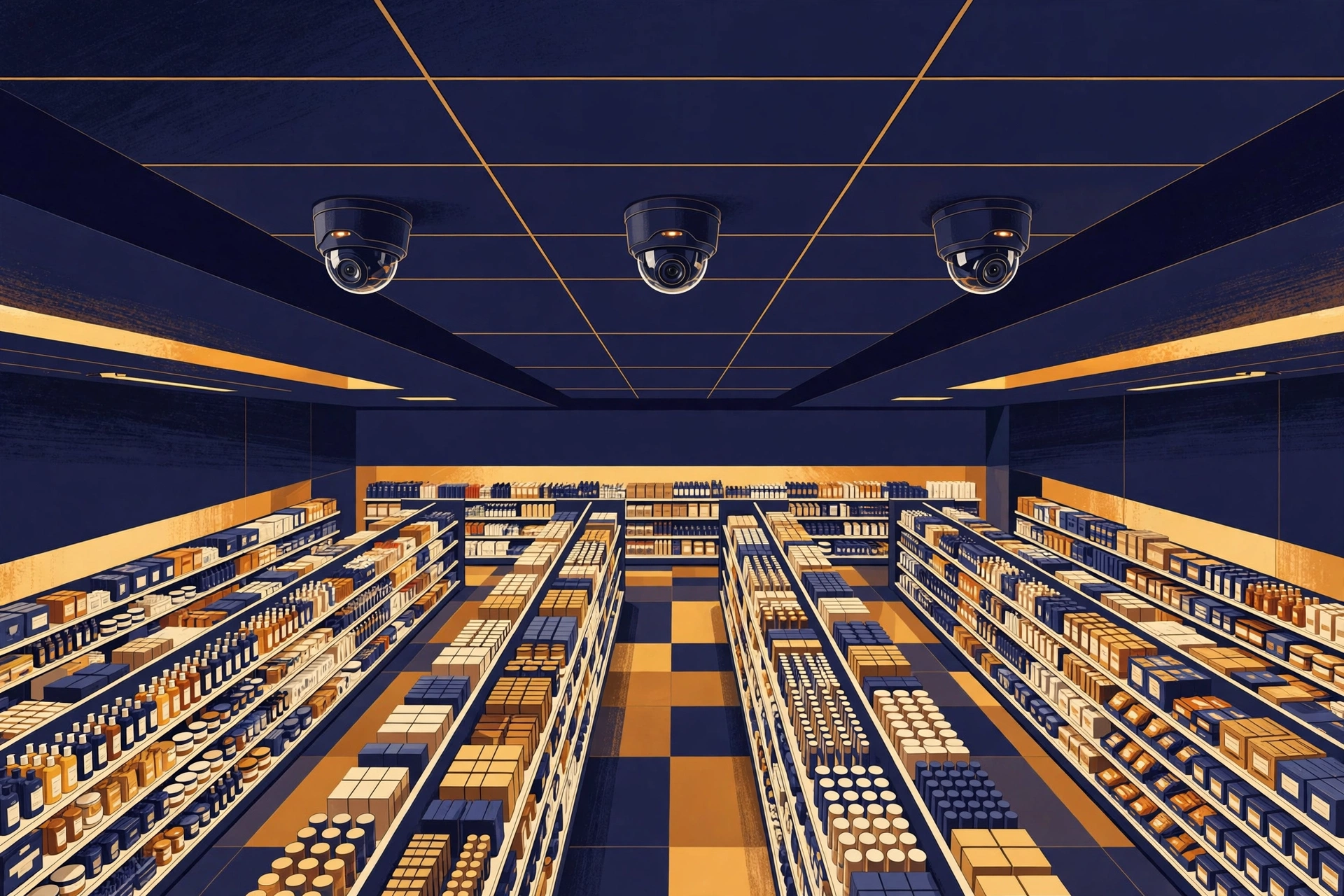
Most stores have cameras. Far fewer have cameras that do any good.
Walk into almost any retail store and you’ll see cameras on the ceiling. What you won’t see is whether anyone thought carefully about where they point, what they can actually resolve, or whether the footage is ever used for anything beyond post-incident review. A camera system that only documents losses after they happen isn’t preventing anything — it’s just producing evidence of failure.
Effective camera placement starts with the money. The point of sale is your highest-value coverage zone: every transaction, every void, every discount, every sweetheart deal happens here. Cameras over registers need to capture both the associate’s hands and the customer’s, with enough resolution to read denominations and see product movement. If your POS cameras can’t clearly show what changed hands, they’re decoration.
Next, cover the exits — all of them, including the receiving doors and emergency exits. Push-out theft and ORC crews rely on fast exits with full carts; a camera that captures faces and vehicle details at the door is worth more than three cameras watching empty aisles. Entrances matter too, but for a different reason: they establish who was in the building and when, which is essential for investigations.
High-value displays and known theft hotspots come third. Your data should tell you which SKUs walk out the door — cosmetics, razor blades, electronics, baby formula. Aim dedicated cameras at those fixtures, not just general aisle coverage. Stockrooms and cash offices need coverage as well; internal theft investigations live or die on whether you can see what happened behind the sales floor.
Resolution and lighting are where most systems quietly fail. A camera pointed at the right spot with the wrong lens is useless. Match the lens to the distance: wide-angle for overview, narrow for identification. And check your lighting — cameras facing windows or bright entryways will silhouette every face into an unrecognizable shadow. Walk the store at different times of day and look at the actual monitor feeds, not the spec sheet. What you see on the monitor is what you’ll have when it matters.
The biggest upgrade most retailers can make isn’t more cameras — it’s pairing the cameras they have with exception-based reporting. EBR flags the suspicious transactions; cameras confirm or clear them. A void at register three at 2:14 PM becomes a thirty-second video review instead of a week-long investigation. Without that pairing, you’re asking LP staff to watch hours of footage hoping to get lucky. Nobody has time for that, so it doesn’t happen.
A few common mistakes to avoid. Don’t mount cameras so high that every face is a forehead — mounting height should serve identification, not just coverage. Don’t forget the parking lot and loading dock; cargo and vehicle-related theft starts outside your four walls. Don’t let cameras drift out of alignment after maintenance or remodeling — schedule a quarterly walk-through to verify every camera still points where it was intended to. And don’t treat the system as install-and-forget: firmware updates, storage capacity checks, and retention policies need regular attention.
Cameras are a tool, not a strategy. Placed with intent, maintained with discipline, and paired with transaction data, they become one of the highest-ROI investments in your loss prevention program.
Not sure your camera layout is pulling its weight? Robert John Bonus Consulting conducts security assessments that evaluate camera coverage, placement, and integration with your LP program — plus training and certification for your team. Learn more at rjbonusconsulting.com.



Leave a Reply