LAPD’s latest cargo recovery shows how stolen freight becomes retail inventory — and why your fencing intel matters.
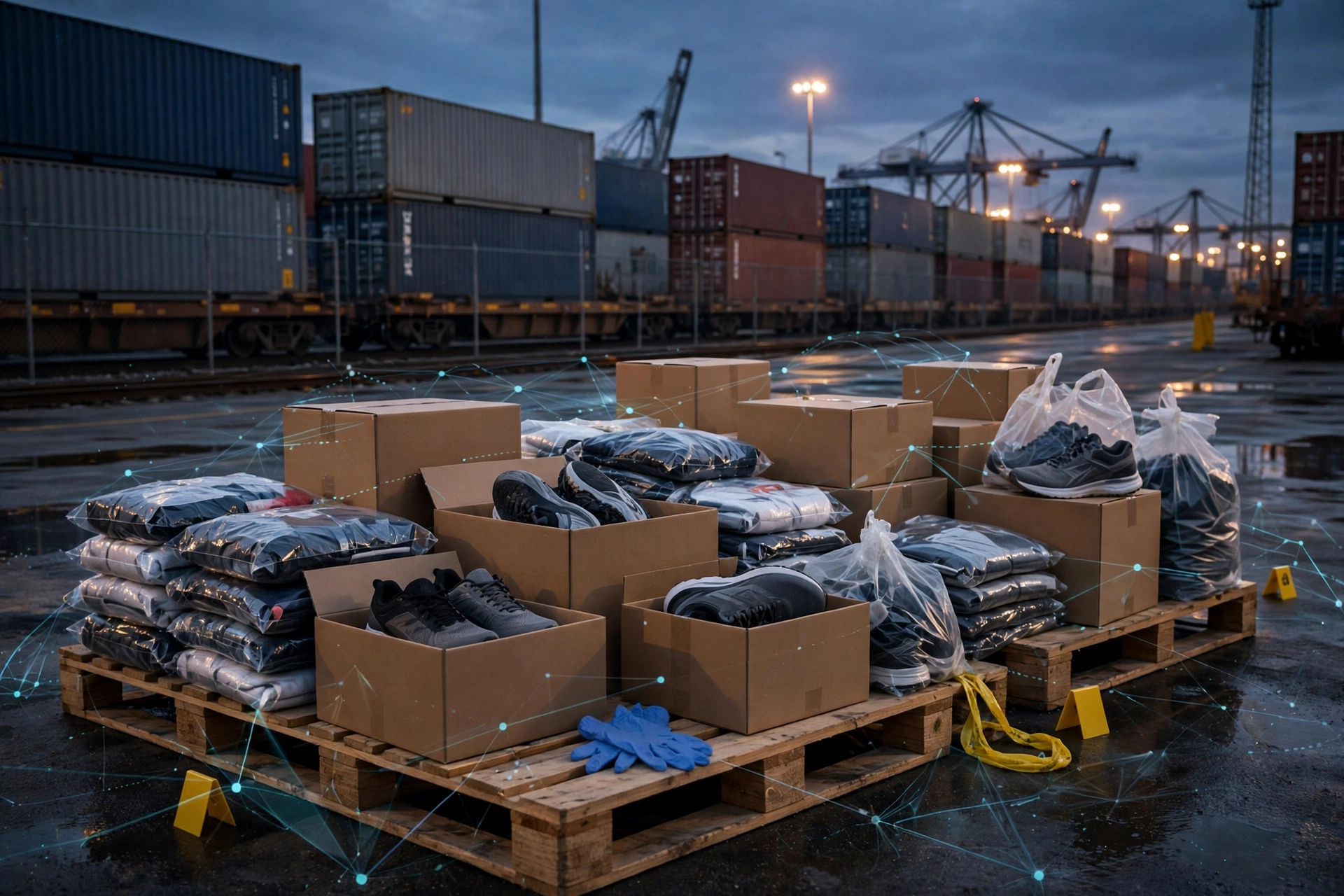
On October 6, LAPD detectives and railroad police served a search warrant on “Shoes n Shoes,” a retail store in Whittier, California, and recovered roughly 60 pallets of merchandise — an estimated $1 million in allegedly stolen goods, from Yeti cups and JanSport backpacks to Nike, New Balance, Brooks, and Sanuk shoes. The merchandise had allegedly been stolen from BNSF and Union Pacific Railroad train property. The 45-year-old owner was arrested on suspicion of receiving stolen property, and according to the LAPD, he admitted buying much of his inventory from “brokers or middlemen” — illegitimate distributors of the brands on his shelves. (Source: MyNewsLA, October 6, 2026)
For loss prevention professionals, this case should read as familiar as a booster apprehension. Cargo theft is not a separate problem from ORC — it is the wholesale supply side of it. The same stolen-goods networks that raid railroad cars and truck trailers feed the fences, resale storefronts, and gray-market shops that LP teams battle every day. Every pallet recovered in this case represents merchandise that, once fenced, would have surfaced in someone’s shrink numbers.
The fence is the chokepoint. Look at the merchandise mix: branded athletic shoes, drinkware, backpacks, portable vacuums — exactly the high-resale, easy-to-move products that show up on ORC target lists. The store owner wasn’t boosting from shelves; he was receiving at scale through “brokers.” For LP and investigations teams, the lesson is direct: fences operate at retail scale now, and they often look like legitimate discount storefronts. If you recover stolen merchandise in an ORC case, trace the resale destination — it may lead straight into a cargo-theft pipeline.
Interagency work is doing the heavy lifting. This takedown involved LAPD’s Commercial Crimes Division Cargo Theft Task Force, Union Pacific Railroad Police, BNSF Police, Alameda Belt Line Police, LA Port Police, and the LA County DA’s Bureau of Investigation. That is what it takes to unravel a pipeline. LP departments can plug into this: share ORC fencing intel with your local task force or cargo-theft unit. A pattern your team sees — odd wholesale sourcing, a store suddenly stocked with shrink-heavy brands — is often the tip a detective needs.
Audit your own supply chain. Before you finish nodding at someone else’s fence, look inward. Salvage vendors, liquidation buyers, returns processors, and third-party “discount” wholesalers are the same chokepoints in your own operation. If a supplier can’t produce legitimate documentation for branded inventory, treat it the way LAPD treated the Whittier store: with suspicion, and possibly a warrant.
Your takeaway today: the fence in your ORC case and the fence in a cargo-theft case are very likely the same business. Share what you see — the next $1 million recovery might start with your tip.
Leave a Reply