Most shoplifting and employee-theft cases are won or lost in the interview room — not on the sales floor. Here’s how to structure one that holds up.
☕ The Afternoon Coffee Break Read
Most loss prevention cases are not won on the sales floor — they are won or lost in the interview room. The footage shows what happened; the interview determines why, and whether the resolution holds up in court, with HR, and under company policy. A structured interview is one of the highest-leverage skills an LP professional can build.
Start with a plan, not a question.
Before the subject sits down, know your objective: admission, restitution amount, co-conspirators, and policy violations. Review the evidence — video, POS data, exception reports — and decide what you can prove without the subject’s help. Never walk in hoping the conversation will tell you what to ask next.
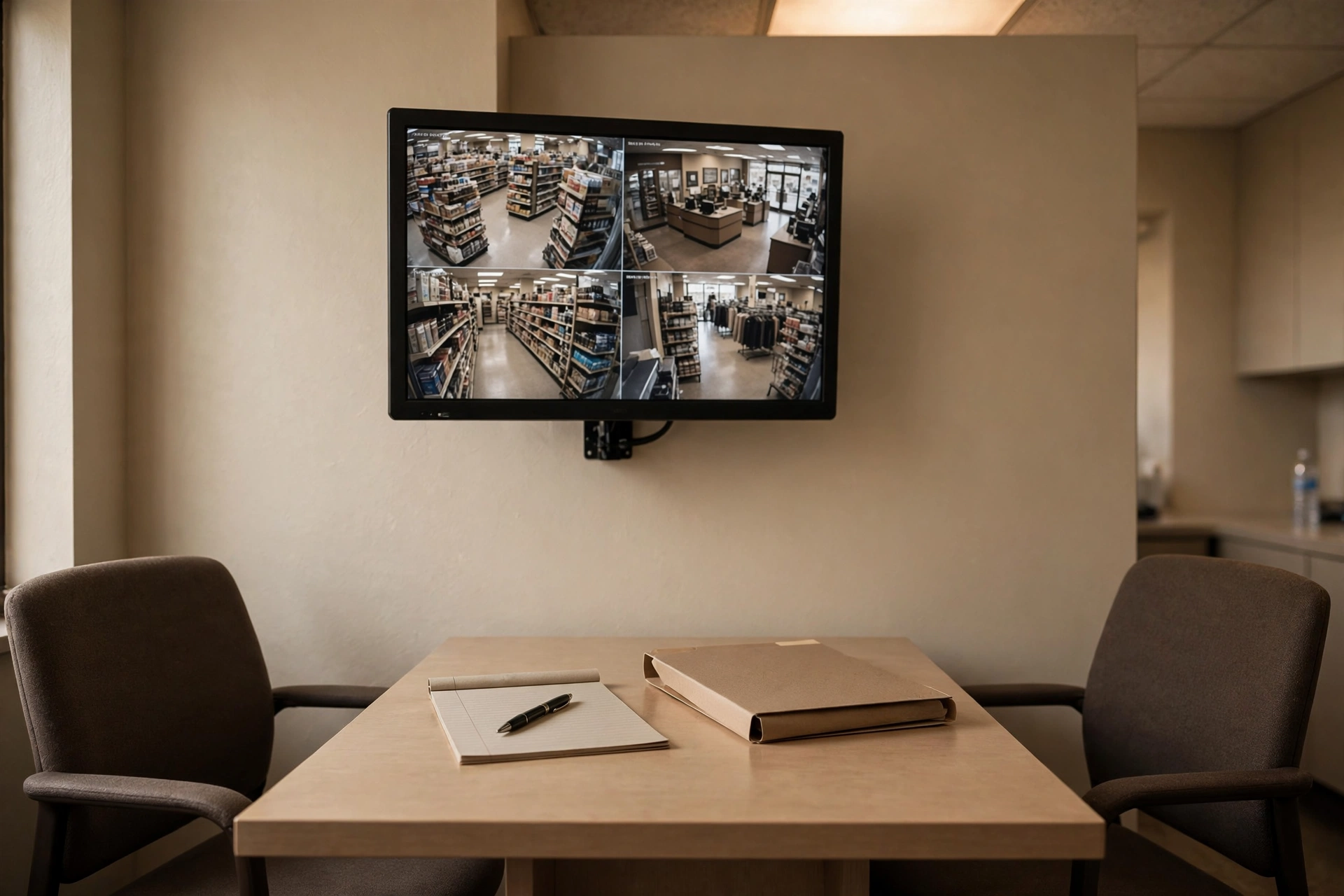
Lock the room down properly.
Private, quiet, no interruptions. One door, one LP professional (a second investigator takes notes if available). Phones silenced. Introduce everyone present and their role, state the purpose plainly, and remind the subject that participation is voluntary and they are free to leave. Coercion kills cases — voluntariness protects them.
Build rapport before you pivot.
Open with non-threatening, open-ended conversation — how long have they worked here, how do they like the job. Listen more than you talk. The goal is a baseline: tone, posture, and cadence you can compare against later when the questions get hard.
Present evidence in layers.
Don’t show your strongest footage first. Start with open-ended questions (“Walk me through your shift yesterday”), then introduce discrepancies one at a time and watch the subject reconcile them with their story. People talk themselves into corners far more effectively than pressure ever could.
Document contemporaneously.
Take notes during the interview and write the final report immediately after — while recall is fresh. Record times, exact quotes, admissions, and the subject’s demeanor. Have the subject review and sign a written statement when possible; a signed admission is the single most valuable document in your case file.
The best interviewers are made, not born. Plan the room, protect voluntariness, layer the evidence, and write it down — and your cases will hold up wherever they go next.
Leave a Reply