
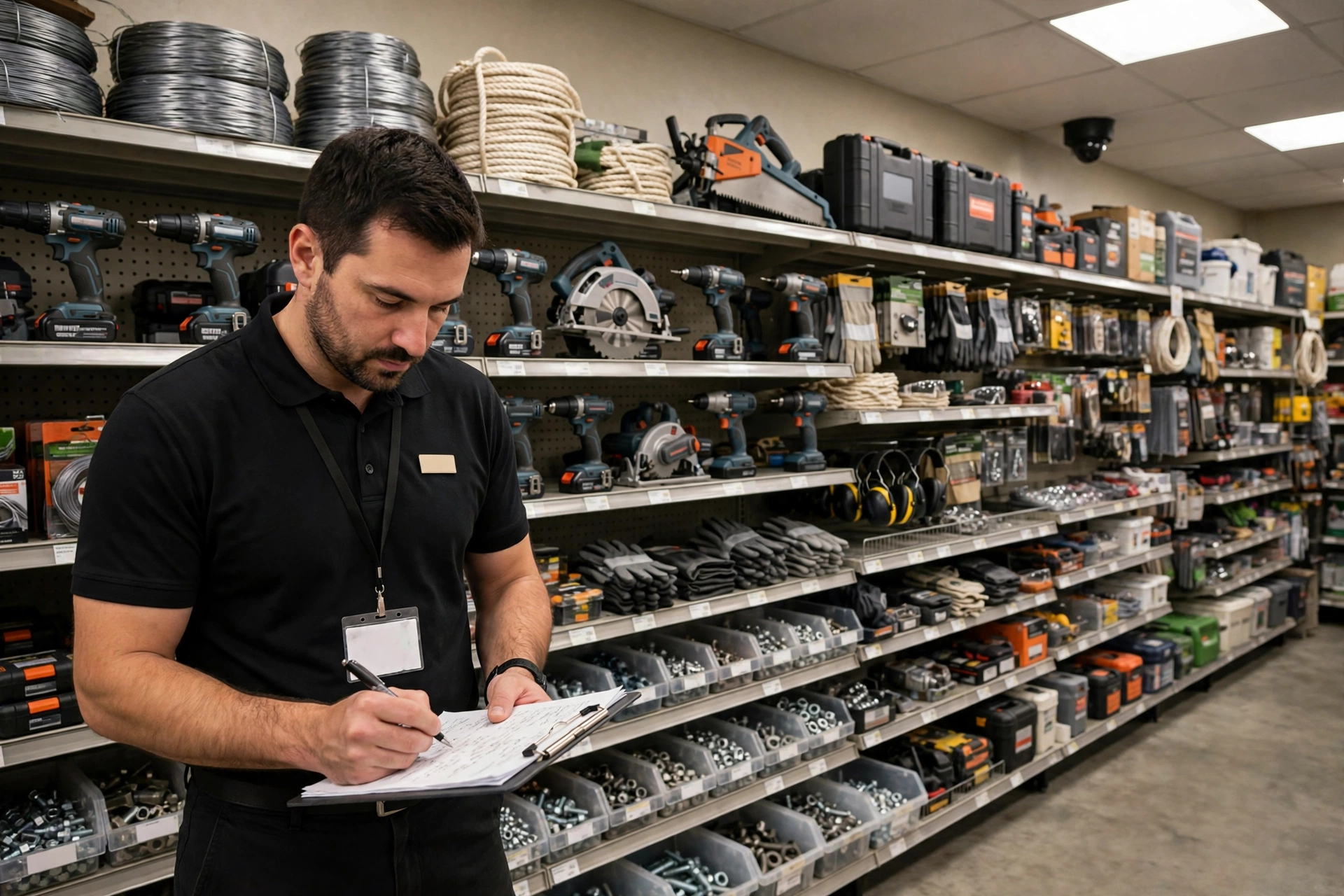
A cross-county theft ring only became a prosecutable case when retailers and police shared the pattern — here’s how to build one.
Today, Ohio Attorney General Andy Wilson announced that Byron Carner, 35, of South Euclid, was sentenced to nine years in prison for stealing more than $104,000 in merchandise — mostly tools — from Rural King farm-supply stores across ten Ohio counties between June and October 2024. Carner pleaded guilty to one count of engaging in a pattern of corrupt activity and eight counts of theft in Clark County Common Pleas Court, and was sentenced immediately after the plea.
The stolen tools were sold at pawn shops. Carner and two suspected accomplices were arrested on October 2, 2024, after a vehicle pursuit involving the St. Clairsville Police Department, the Belmont County Sheriff’s Office, and the Ohio State Highway Patrol. The German Township Police Department investigated the case with assistance from the Ohio Bureau of Criminal Investigation, and the Clark County Prosecutor’s Office prosecuted it, with the Attorney General serving as special prosecutor. Cases against the suspected accomplices are still pending.
The quote worth pinning to your office wall came from Wilson himself: “This is how you prosecute organized crime — by taking a unified approach to crimes that cross county lines.” That sentence is the whole lesson. No single store’s loss, viewed alone, looked like a nine-year case. Ten stores’ losses, connected, did.
Report across lines, not just within them. A booster working a region counts on each store treating a hit as an isolated incident. When loss prevention shares descriptions, vehicle information, merchandise mix, and timing across a district or region — and with neighboring jurisdictions — a pattern emerges that no single incident report can show. If your company has stores in more than one county, your reporting chain should cross county lines as easily as the thief does.
Treat pawn shops as part of the investigation, not an afterthought. In this case, the fence was the trail. Tools are attractive precisely because they hold resale value and move quickly through secondhand channels. Serial numbers, distinctive markings, and good photos taken at receiving or on the sales floor turn a generic “missing drill set” into an identifiable item a detective can recover and a prosecutor can tie to a defendant. If your team is not capturing serial numbers on high-value tools, that is a gap worth closing this week.
Build the case file as if a prosecutor will read it — because one might. Dates, locations, amounts, preserved video, and inventory records tying each item to a specific store and date are what elevate a stack of incident reports into a pattern-of-corrupt-activity charge. Sloppy documentation is how multi-jurisdiction cases fall apart; clean documentation is how they hold together.
Recognize tools as a target category. Farm-supply and hardware merchandise combines high value, easy resale, and weak traceability. If tools are a high-shrink category in your stores, they deserve the same attention you give electronics or fragrances: locked or cabled displays for the top items, exception reporting on tool-category shrink, and a direct line to local pawn detail detectives.
The Ohio case took two years from arrest to sentence, and it started with police departments and a prosecutor’s office willing to work as one team. LP’s role in that kind of outcome is unglamorous and essential: share the pattern early, document it cleanly, and keep the evidence trail intact across every store the thief visits.
Source: Ohio Attorney General announcement via EIN Presswire, November 2, 2026: https://www.einpresswire.com/article/953970756/cuyahoga-county-man-pleads-guilty-to-organized-crime-theft-charges
The takeaway: one store’s theft report is an incident; ten stores’ reports, shared early, are a case.

Leave a Reply