
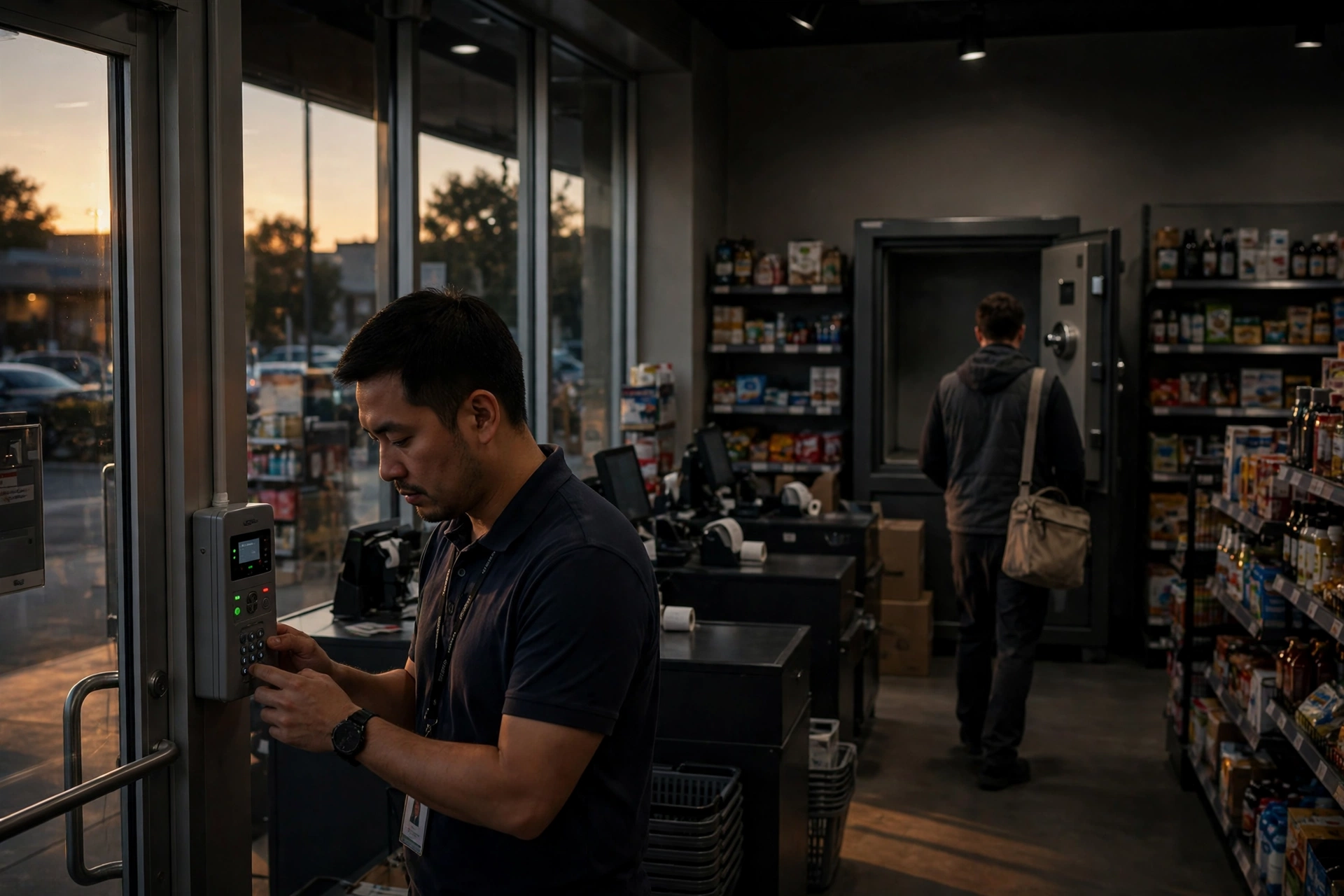
Most overnight losses don’t start at midnight — they start at closing, when the safe count is rushed, the back-door check is skipped, and the alarm is assumed, not verified.
Ask any investigator where an overnight loss usually begins and the answer is rarely a sophisticated break-in. It is a door left unsecured, a safe count done alone and in a hurry, an alarm that was never actually armed, or a back room nobody swept before the lights went out. Closing is a loss prevention procedure, not just the end of the shift — and it deserves the same discipline as opening.
Count with two people and reconcile before anyone leaves. Safe counts, register tills, and deposit bags should be verified by a second person, with variances documented the same night, not discovered the next morning when the trail is cold. A solo count is an invitation: it removes the witness, the cross-check, and the paper trail all at once. If staffing only allows one closer, require a manager review of the count sheet and the deposit record first thing the next day — and make that review visible, so the closer knows it happens.
Sweep the whole store, not just the sales floor. Stockrooms, receiving areas, restrooms, fitting rooms, and offices are where people hide, merchandise gets staged, and doors get propped. Walk every space, check every door and window latch, and confirm the receiving door is locked from the inside. Staged merchandise found at closing is a prevented loss; staged merchandise found at opening is a police report.
Account for keys and access before you lock up. Collect temporary keys from vendors, contractors, and seasonal staff who will not be back tomorrow, and log who still holds what. A key that walked out with a departing employee is an unlocked door you cannot see — and it stays that way until someone audits the key log.
Verify the alarm and the cameras — do not assume them. Arm the system and confirm the panel shows a clean, armed status, not a bypassed zone or a trouble signal everyone has learned to ignore. Glance at the camera system to confirm it is recording, with the right date and time stamp. An alarm that was never armed and a camera that stopped recording last Tuesday are the two most common discoveries after an overnight incident, and both are preventable in thirty seconds at closing.
Step outside before you drive away. Check that exterior lighting is on, the dumpster area is clear, and no one is lingering near the building or in a parked vehicle. Good lighting and a clear lot do not just deter a break-in; they tell anyone watching that this store is watched.
Write it down. A short closing log — who closed, what was counted, what was found, what was exceptional — turns closing from a habit into evidence. When something does go wrong overnight, that log is what tells investigators and leadership whether the store was secured or merely assumed secure.
Closing well costs about ten focused minutes. Closing carelessly can cost a night’s inventory, a safe’s contents, and a case that never gets solved. Close like you mean it.

Leave a Reply