
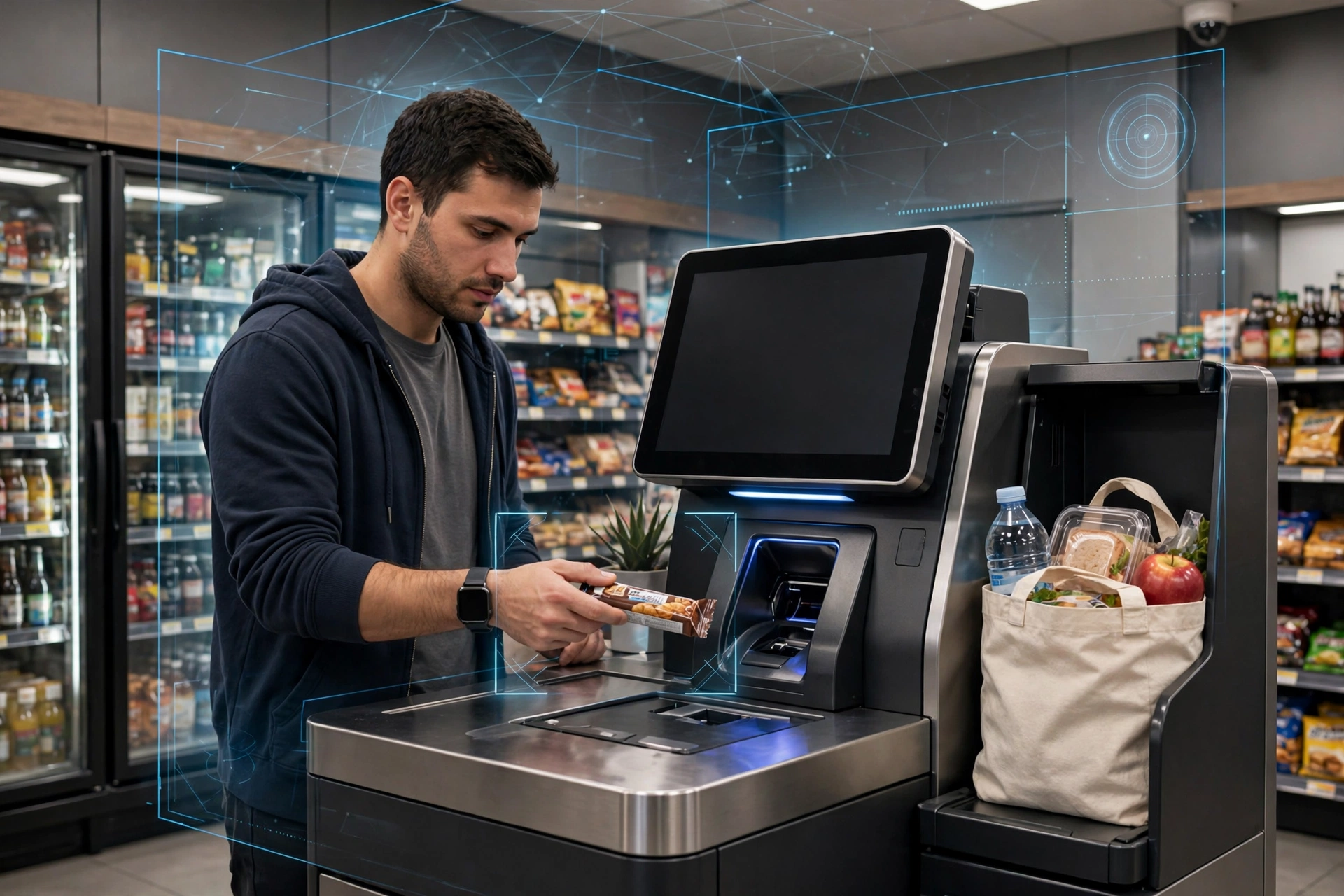
With Partner Tech’s Verifone Commander certification and Scandit’s loss-prevention debut, computer-vision theft detection is moving from pilot to standard equipment.
Two announcements, one month apart, signal that AI-powered theft detection at self-checkout is graduating from pilot programs to mainstream retail infrastructure. If you run loss prevention, this is the moment to pay attention.
Partner Tech announced that its AI-powered self-checkout platform — built with real-time theft prevention — earned certification for integration with Verifone Commander, the leading site controller and point-of-sale platform for fuel and convenience retailers. The certification opens the door to deployment across more than 55,000 fuel and convenience sites in North America — roughly 45% of all U.S. fuel and convenience stores.
The practical detail matters: retailers can add Partner Tech’s self-checkout terminals alongside their existing Verifone Commander C18 terminals without ripping out payment, fueling, loyalty, and store management infrastructure. The platform’s loss prevention capabilities include AI-powered theft detection with real-time transaction monitoring, computer-vision item recognition, security scale, live video, and age verification support. LP tech that rides the infrastructure you already own gets adopted faster — this deal is the textbook example.
The second signal came when Scandit entered the loss prevention market outright with a software-first Self-Checkout Loss Prevention solution. It targets the known loss patterns every LP leader recognizes: missed scans, intentionally skipped items, left-in-trolley, and abandoned transactions. The solution deploys as a per-station architecture with no dedicated servers and no purpose-built AI hardware — it works with existing camera infrastructure, whether built-in, off-the-shelf, or standard security cameras above the station.
What stands out for practitioners: Scandit’s approach processes video on the station and analyzes items and transaction activity only — no facial or biometric identification required. Privacy-by-design isn’t just good ethics; it removes an entire layer of regulatory friction.
Here’s what it means for the field:
- You can’t hire your way out of SCO loss. Missed scans and skip-scanning happen at the station, one lane at a time. Technology that intervenes in real time is the scalable answer — and the market is now converging on it.
- Intervention design is everything. A detection that fires three seconds too late produces a confused customer and a staff scramble. When you evaluate vendors, test detection-to-intervention timing, not just detection accuracy.
- Audit trails still matter. Real-time monitoring has to log events in ways your LP team can investigate, measure, and report. Ask vendors how detection events export into your case management workflow.
- Watch the adoption curve. When AI self-checkout security certifies against platforms running in nearly half of U.S. fuel and convenience stores, it’s not a pilot anymore. Budget accordingly.
For LP leaders planning 2027, self-checkout AI has moved off the “someday” list.
Sources: Partner Tech announcement (Oct 5, 2026); Scandit loss prevention launch (Sept 2026).
Evaluating self-checkout technology for your stores? Robert John Bonus Consulting helps retailers assess LP tech, design rollout plans, and measure results. Contact us.
Leave a Reply