
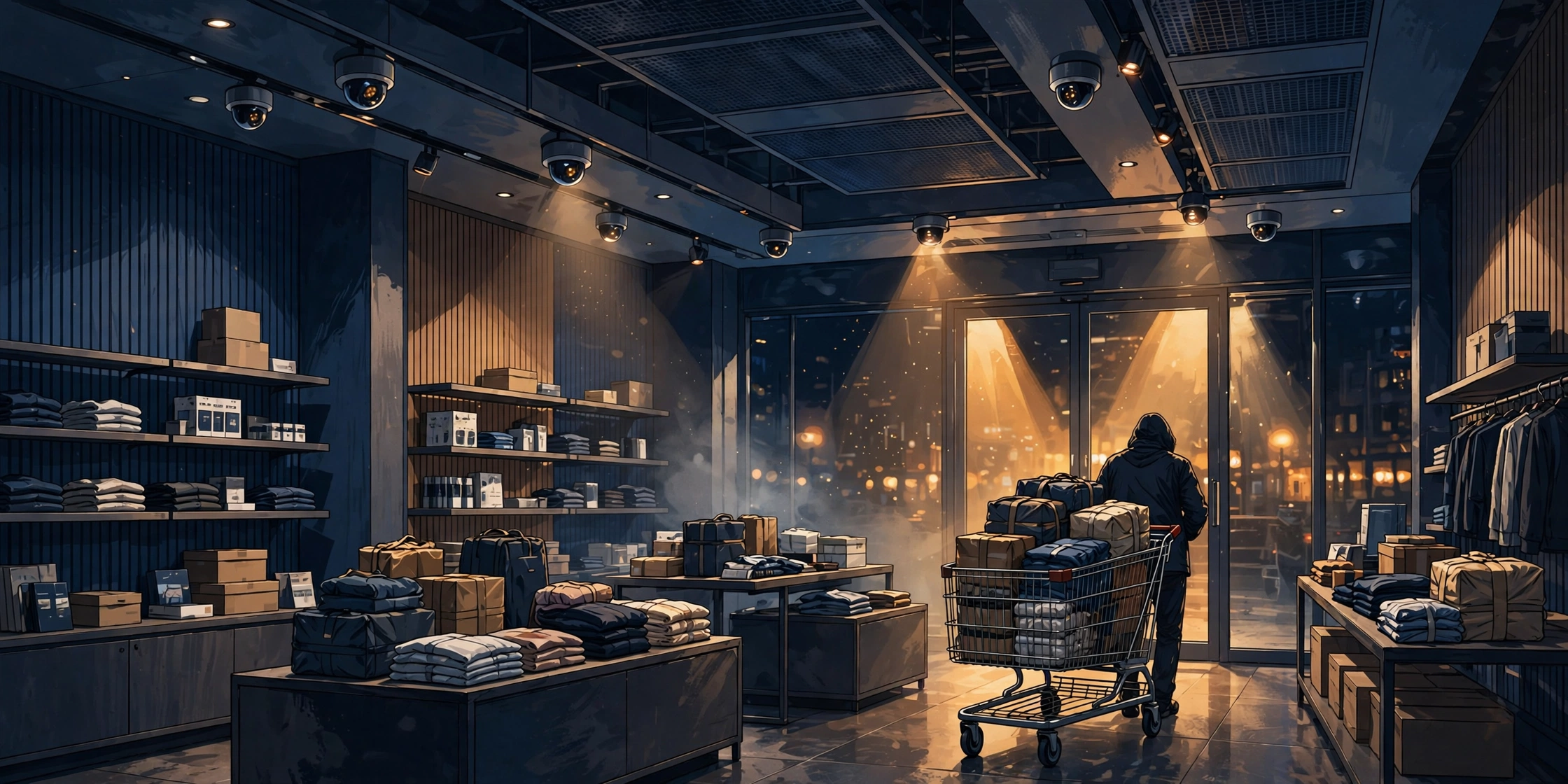
Boosters, fences, and online resale — how professional theft crews operate and what you can do about it.
Shoplifting used to be a crime of opportunity: one person, one item, one bad decision. Organized retail crime is something else entirely. ORC is theft as a business — coordinated crews, planned targets, and resale channels that turn stolen merchandise into cash at industrial scale. If your loss prevention program still treats every theft like an isolated incident, you’re fighting the wrong fight.
Here’s how the operation typically works. The “boosters” are the people who walk into stores and steal. They aren’t random — they’re assigned hit lists of specific high-value, easy-to-resell products: razor blades, cosmetics, baby formula, over-the-counter medications, designer handbags, power tools. They work in teams, often hitting multiple locations of the same chain in a single day, using distraction, push-out carts loaded with merchandise, or simply overwhelming short-staffed stores during peak hours.
The stolen goods flow to “fences” — middlemen who buy in bulk, repackage, and resell. The fence is the engine of the whole enterprise. Some operate out of storage units or flea markets; the sophisticated ones run polished online storefronts on major marketplaces, where stolen products blend invisibly into legitimate inventory. This is why ORC is growing: e-commerce gave fences a frictionless, nationwide distribution channel with near-zero overhead.
Three forces are driving the surge. First, resale is easier than ever — a booster can convert product to cash within hours. Second, many jurisdictions have raised felony theft thresholds or deprioritized prosecution, lowering the risk side of the equation. Third, staffing shortages mean fewer eyes on the sales floor and slower response times, which professional crews exploit deliberately.
So what actually works against it? Four countermeasures, in order of impact:
1. Share intelligence, not just incidents. Join your regional ORC association or retail crime intelligence network. A crew hitting your stores on Tuesday is hitting someone else’s on Wednesday. Photographs, vehicle descriptions, and product lists shared across retailers and law enforcement turn isolated incidents into prosecutable patterns.
2. Harden the target products. Locking cases, keeper boxes, and behind-counter placement for the top ten most-stolen SKUs removes the profit motive. Yes, it adds friction for legitimate shoppers — but losing the product entirely is worse friction. Test and measure; most retailers find the sales impact is far smaller than feared.
3. Train for recognition, not confrontation. Teach associates to spot the behaviors — multiple people entering together and splitting up, repeated visits without purchases, oversized bags or clothing, focus on high-value aisles — and to report, not engage. Professional crews can be dangerous. The goal is intelligence gathering and deterrence through visible awareness, never a physical confrontation.
4. Prosecute the fence, not just the booster. Work with law enforcement to follow the product upstream. Arresting a booster removes one thief for a day; dismantling a fence disrupts the economics for every crew it supplied. This is where your incident reports, video evidence, and product serialization pay off.
ORC isn’t going away. But retailers who treat it as an organized business problem — with intelligence, target hardening, and upstream enforcement — shrink it from an existential threat to a managed cost.
If ORC is hitting your stores, an outside assessment can spot the vulnerabilities your team walks past every day. Robert John Bonus Consulting offers security assessments, loss prevention strategy, and professional training and certification — learn more at rjbonusconsulting.com.
Leave a Reply