
Author: admin

  • Lock Down the Back Door: Five Receiving-Dock Controls That Stop Shrink Before It Starts

    Lock Down the Back Door: Five Receiving-Dock Controls That Stop Shrink Before It Starts

    Most shrink never makes it to the sales floor — it disappears at the dock. Tighten receiving and you tighten the whole store.

    Walk into almost any store and ask where shrink happens, and you’ll hear about shoplifters and organized retail crime. Ask a seasoned LP investigator and you’ll get a quieter answer: the receiving dock. Vendor shortages, short shipments, “damaged” merchandise that never was, and deliveries signed for sight unseen — the dock is where inventory quietly leaks before it ever reaches a shelf. And because the loss is buried in paperwork, it rarely shows up as a theft at all.

    The good news: dock shrink is one of the most controllable losses in the store. Five controls, applied consistently, close most of it.

    1. Never sign blind — count before you sign. The single most expensive habit at the dock is signing a delivery receipt without verifying the count. Once that signature is on the paper, your leverage is gone. Require receivers to verify piece counts and case counts against the packing slip before signing, and note every shortage or overage on the document itself, in writing, before the driver leaves. “Subject to count” notations are better than nothing, but an actual count is better than a notation.

    2. Separate the receiver from the checker. When the same person who orders, receives, and stocks a delivery also reconciles the paperwork, you’ve built a one-person fraud opportunity. Split the duties: one person unloads and counts, another verifies the paperwork and logs discrepancies. In smaller stores where staffing won’t allow a full split, rotate receiving duties and have a manager spot-check one delivery per week. Rotation alone deters a surprising amount of quiet collusion.

    3. Treat vendor access like any other security risk. Delivery drivers and vendor reps should not have unescorted run of the back room. Keep them in the receiving area, require sign-in, and escort them anywhere else they need to go. Watch for the classic tells: drivers who rush the count, reps who insist on “just dropping it in the back,” and deliveries that always seem to arrive during the busiest hour, when nobody has time to check.

    4. Audit high-shrink categories on arrival, not at inventory. Don’t wait for the quarterly count to discover that a high-value category is short. Build a short list of your highest-shrink SKUs — electronics, fragrances, small appliances, premium apparel — and require a unit-level check on those items at the dock, every delivery. Catching a shortage at receiving turns it into a vendor claim. Catching it at inventory turns it into an unsolved loss.

    5. Log every discrepancy, and review the log weekly. A discrepancy log that nobody reads is just decoration. Have the store manager or LP lead review the dock log every week, looking for patterns: the same vendor short every time, the same receiver signing off on damaged goods, the same driver on every “miscount.” Patterns are where dock loss becomes a case. One shortage is a mistake; five from the same vendor is a story.

    The dock will never be glamorous, and nobody writes headlines about a clean receiving log. But every case that walks out the front door started as inventory that came in the back — and the stores that protect the back door lose a lot less out the front.

    Start with one control this week: count before you sign, on every delivery, no exceptions.

  • Six Arrests, .4 Million, and One Alert Delivery Driver: What the Peoria Fraud Bust Teaches E-Commerce LP

    Six Arrests, .4 Million, and One Alert Delivery Driver: What the Peoria Fraud Bust Teaches E-Commerce LP

    A stolen-credit-card ring bought merchandise online and funneled it into shipping containers bound for Vietnam — until a delivery driver noticed what the analytics didn’t.

    On October 22, 2026, police in Peoria, Arizona arrested six suspects in a sophisticated fraud operation that used stolen Walmart customer credit card data to purchase an estimated $1.4 million in merchandise online — then funneled the goods into shipping containers bound for Vietnam. All six suspects are being held on $500,000 cash-only bond each. So far police have recovered $25,000 in merchandise, $35,000 in cash, and $45,000 in gold bars. (Source: WiseVoter report, October 22, 2026.)

    This wasn’t a smash-and-grab crew. This was organized retail crime wearing an e-commerce mask: stolen card credentials, online orders, and an international freight pipeline moving the proceeds out of the country before anyone inside the retailer noticed.

    The tip that broke it open

    The investigation began not with an algorithm, but with a Walmart delivery driver who noticed multiple packages addressed to various names all being delivered to a single home. That one observation led police to an operation that had been running for roughly two months. No fraud rule fired. No exception report flagged it. A frontline worker paid attention.

    What this means for LP teams

    Card-not-present fraud is now a direct supply line from your webstore to overseas fences. Three practical takeaways from this case:

    1. Audit ship-to anomalies. Multiple recipient names at one address, high-volume deliveries to a residential address, repeated cardholder-name mismatches at checkout. Your e-commerce fraud tools should flag these automatically; if they don’t, build a manual weekly report. The Peoria ring ran for two months on this pattern alone.

    2. Treat your last-mile partners as sensors. Delivery drivers, parcel room staff, and carrier personnel see what dashboards miss. Give them a simple, fast way to flag “something looks off” — and make sure that flag reaches loss prevention, not a black hole. The driver in Peoria had a reporting path, and it worked.

    3. Connect the dots across channels. Online orders paid with stolen cards, delivered to a single address, staged for export: that is the same booster-to-fence pattern your investigations team already hunts in brick-and-mortar. Share the pattern internally the way you would any organized theft case, and build the relationship with local law enforcement’s financial crimes unit before you need it.

    The Peoria bust wasn’t solved by new technology — it was solved by a person who paid attention. Build systems that reward that.

  • Fire Doesn’t Care About Your Shrink Numbers — Your Inspection Checklist Is Part of Loss Prevention

    A failed fire inspection costs fines, shutdowns, and sometimes the building. LP and safety teams are the ones who keep the checklist alive between inspections.

    Ask a loss prevention team what they’re protecting, and the answers are usually the same: merchandise, cash, people. Now add a fourth: the building itself. A fire doesn’t need a booster or a fraudster — it needs an ignored checklist. And when the fire marshal walks in and finds blocked exits, expired extinguishers, or a dead alarm panel, the fine is only the beginning. In many jurisdictions, serious violations mean the business stops operating that day.

    Fire prevention lives inside loss prevention’s job whether it’s on the org chart or not. Nobody else walks the store every night with an eye for what’s wrong. Use that habit.

    Exits are not storage space. The single most common fire violation in retail is also the most preventable: blocked emergency exits. Stock overflow, seasonal pallets, returns carts, and promotional fixtures migrate toward back doors and exit corridors because that’s where the empty space is. Make exit-walk checks part of the opening or closing sweep: doors must open freely in the direction of egress, aisles and corridors must stay clear all the way to the door, and exit signage must be illuminated. If it takes more than one motion to get out, it’s a violation — and a liability.

    Extinguishers expire quietly. Mount extinguishers where they’re visible and reachable, never locked behind merchandise. Then put them on a real schedule: monthly visual checks (pressure gauge in the green, pin and tamper seal intact, no corrosion or damage) and professional servicing at least annually. An extinguisher that fails in a real fire is a lawsuit; one that fails an inspection is a fine. Tag and date every inspection, and keep the service records where you can produce them on demand.

    Test the systems you assume are working. Fire alarm panels, smoke detectors, sprinkler systems, and emergency lighting all fail silently. Verify alarm and sprinkler testing is on a contracted schedule with a licensed vendor — and confirm it actually happened by asking for the reports. Test emergency lighting monthly; dead backup lights turn a power outage into an evacuation hazard. If your site has a sprinkler room, it should be accessible, labeled, and free of stored product. A sprinkler valve shut off “temporarily” during a remodel has started more than one catastrophe.

    Treat every fire inspection like an audit you can’t reschedule. The marshal doesn’t call ahead. Keep a binder or digital file: extinguisher service tags, alarm and sprinkler test reports, hood-system cleaning certificates for food operations, evacuation plans, and the log of your own exit-walk checks. Walk the property yourself quarterly with a fire-inspection mindset — or better, invite the fire department for a pre-inspection walkthrough. They would rather help you fix problems than fine you for them, and the goodwill is free.

    Your takeaway today: the fire marshal’s checklist and your LP walk checklist are the same habit with different consequences. Add the five-minute exit and extinguisher check to your nightly sweep — it’s the cheapest insurance your store buys.

  • $1 Million in Stolen Cargo Found in One Store: The Freight-to-Fence Pipeline LP Teams Can’t Ignore

    $1 Million in Stolen Cargo Found in One Store: The Freight-to-Fence Pipeline LP Teams Can’t Ignore

    LAPD’s latest cargo recovery shows how stolen freight becomes retail inventory — and why your fencing intel matters.

    On October 6, LAPD detectives and railroad police served a search warrant on “Shoes n Shoes,” a retail store in Whittier, California, and recovered roughly 60 pallets of merchandise — an estimated $1 million in allegedly stolen goods, from Yeti cups and JanSport backpacks to Nike, New Balance, Brooks, and Sanuk shoes. The merchandise had allegedly been stolen from BNSF and Union Pacific Railroad train property. The 45-year-old owner was arrested on suspicion of receiving stolen property, and according to the LAPD, he admitted buying much of his inventory from “brokers or middlemen” — illegitimate distributors of the brands on his shelves. (Source: MyNewsLA, October 6, 2026)

    For loss prevention professionals, this case should read as familiar as a booster apprehension. Cargo theft is not a separate problem from ORC — it is the wholesale supply side of it. The same stolen-goods networks that raid railroad cars and truck trailers feed the fences, resale storefronts, and gray-market shops that LP teams battle every day. Every pallet recovered in this case represents merchandise that, once fenced, would have surfaced in someone’s shrink numbers.

    The fence is the chokepoint. Look at the merchandise mix: branded athletic shoes, drinkware, backpacks, portable vacuums — exactly the high-resale, easy-to-move products that show up on ORC target lists. The store owner wasn’t boosting from shelves; he was receiving at scale through “brokers.” For LP and investigations teams, the lesson is direct: fences operate at retail scale now, and they often look like legitimate discount storefronts. If you recover stolen merchandise in an ORC case, trace the resale destination — it may lead straight into a cargo-theft pipeline.

    Interagency work is doing the heavy lifting. This takedown involved LAPD’s Commercial Crimes Division Cargo Theft Task Force, Union Pacific Railroad Police, BNSF Police, Alameda Belt Line Police, LA Port Police, and the LA County DA’s Bureau of Investigation. That is what it takes to unravel a pipeline. LP departments can plug into this: share ORC fencing intel with your local task force or cargo-theft unit. A pattern your team sees — odd wholesale sourcing, a store suddenly stocked with shrink-heavy brands — is often the tip a detective needs.

    Audit your own supply chain. Before you finish nodding at someone else’s fence, look inward. Salvage vendors, liquidation buyers, returns processors, and third-party “discount” wholesalers are the same chokepoints in your own operation. If a supplier can’t produce legitimate documentation for branded inventory, treat it the way LAPD treated the Whittier store: with suspicion, and possibly a warrant.

    Your takeaway today: the fence in your ORC case and the fence in a cargo-theft case are very likely the same business. Share what you see — the next $1 million recovery might start with your tip.

  • When Not to Make the Stop: Judgment Calls That Separate Good LP Agents From Lawsuits

    When Not to Make the Stop: Judgment Calls That Separate Good LP Agents From Lawsuits

    The best apprehension you ever made might be the one you walked away from.

    Every loss prevention agent learns the five elements of a clean apprehension: approach, selection, concealment, continuous surveillance, and failure to pay. Miss one and the stop is bad. But the part nobody teaches — the part that only comes with experience — is this: a textbook-ready stop can still be the wrong stop. Knowing when to walk away is the skill that keeps careers, and companies, out of lawsuits.

    Here’s the truth nobody likes to say out loud. A detention is a seizure of a person, and everything you did before the stop gets scrutinized under a microscope. The merchandise, the surveillance footage, your report, your demeanor on the sales floor — all of it. When an agent makes a stop they shouldn’t have, it almost never fails on the elements. It fails on judgment.

    1. The merchandise value doesn’t justify the risk. Policy thresholds exist for a reason. If your company sets a $50 or $100 minimum for apprehension, respect it. A stop on a $12 item that turns physical, goes viral, or ends in a civil claim will cost the company a hundred times the shrink it saved. Document the incident, run the plate, and let it feed your ORC intelligence file instead.

    2. You lost continuous surveillance — even for a moment. The suspect entered a restroom, ducked into a stockroom door propped open by an associate, or you simply lost sight of them behind a fixture for ten seconds you can’t account for. If you can’t swear under oath that you saw them continuously from selection to exit, you don’t have a stop. You have a guess.

    3. The person is a known risk. You’ve seen the intelligence bulletins: known aggressive subjects, subjects with weapons history, groups working in teams. A solo agent following a subject with a known violent history into the parking lot isn’t bravery — it’s a policy violation waiting to become an incident report about you. Call it in, get coverage, or let them go.

    4. The scene has gone sideways. A crowd is gathering. An associate has started a confrontation on their own. The subject is threatening to make a scene in front of children. The apprehension that happens in a controlled, professional manner is the same apprehension that becomes a nightmare when the environment stops being controllable. Discretion here isn’t weakness — it’s exactly what the company pays you for.

    5. You can’t articulate the “why” in one sentence. Before you close the distance, ask yourself: can I explain this stop to a prosecutor, a jury, and my director of LP in a single clear sentence? “I watched him select the jacket, conceal it in his bag, maintain uninterrupted observation, and exit without attempting to pay.” If you need three sentences and a “well, actually,” you’re not ready.

    The agents who last in this profession aren’t the ones with the most apprehensions on the board. They’re the ones whose stops all held up — because every single one was clean, documented, and defensible. Ten solid apprehensions a month beats twenty stops with two bad ones hanging over your head.

    Want your LP team sharpening judgment calls like this? I help retailers build apprehension training programs that keep agents confident — and keep the company out of court. Reply to this post or visit rjbonusconsulting.com to start the conversation.

  • 1,900 Arrests in Nine Days: What the National ORC Blitz Means for LP Teams

    1,900 Arrests in Nine Days: What the National ORC Blitz Means for LP Teams

    The 2026 National ORC Blitz recovered over million in retail theft losses through coordination and intelligence-sharing — here is how your team plugs into the same model.

    ☕ The Afternoon Coffee Break Read

    Nine days. Thirty-two states. Eighty-four law enforcement agencies and forty retail brands working from the same playbook. The second National Organized Retail Crime Blitz, held this August, ended with more than 1,900 apprehensions and arrests and more than $2 million in retail theft losses recovered or prevented, according to a joint announcement from the National Retail Federation, the Cook County State’s Attorney’s Office, the Cook County Regional Organized Crime Task Force, and the Los Angeles Organized Retail Crime Association (Carrier Management, Oct 7, 2026). That scale does not happen by accident. It happens when retailers and police stop working parallel cases and start working one case.

    Intelligence-sharing is the force multiplier

    The blitz ran on shared intelligence, coordinated investigations, and targeted operations — not on luck. Participating agencies developed seven leads involving “fencing” operations selling stolen merchandise, recovered six stolen vehicles, and seized eight weapons. When your store reports a booster incident to a regional task force with usable details — vehicle descriptions, plate data, known faces, fencing links — it becomes part of a pattern instead of a single line in a shift report. One case in the blitz led to the recovery of a trafficking victim who was being exploited and forced to steal for her abductors; the investigation continues, and she received medical care. That outcome exists only because someone connected dots across jurisdictions.

    The LP takeaway: package cases, don’t just log incidents

    “Organized retail crime is most effectively addressed when retailers and law enforcement work together,” said Cook County Regional Organized Crime Task Force deputy director Edward Henkel. For LP teams, that means three habits. First, document booster incidents with prosecution-ready detail: clear video, product lists, values, times, and any identifying information. Second, push that information to your regional ORC task force proactively — do not wait for police to ask. Third, coordinate internally across stores so the same crew hitting five locations shows up as one case file, not five separate reports.

    The pipeline is getting federal attention

    The National Retail Federation is urging the U.S. Senate to pass the Combating Organized Retail Crime Act, which cleared the House in May and would strengthen federal coordination against cross-jurisdictional and transnational retail crime groups. If you want to see how an operation of this scale gets built, Loss Prevention Media is hosting a behind-the-scenes webinar with the people who ran it on Thursday, October 22, from 2:00 to 3:30 p.m. EST — “ORC Coast-to-Coast: Collaboration and Impact Across America.”

    ORC is a networked crime, and it takes a networked response to beat it. Build the reporting habits now — document, share, coordinate — and your team is already fighting at the blitz’s level.

  • Stop Gift Card Fraud at the Register

    Stop Gift Card Fraud at the Register

    Tampered cards, barcode swaps, and bulk buys — the red flags your cashiers can catch before the money walks out.

    Gift cards are easy money — for your customers and for fraudsters. A tampered card sells at full face value, leaves no inventory trail, and converts into cash or merchandise in minutes. LP teams that treat the gift card rack like ordinary merchandise are leaving a hole in the front end. Here is how to close it.

    Watch for barcode swaps

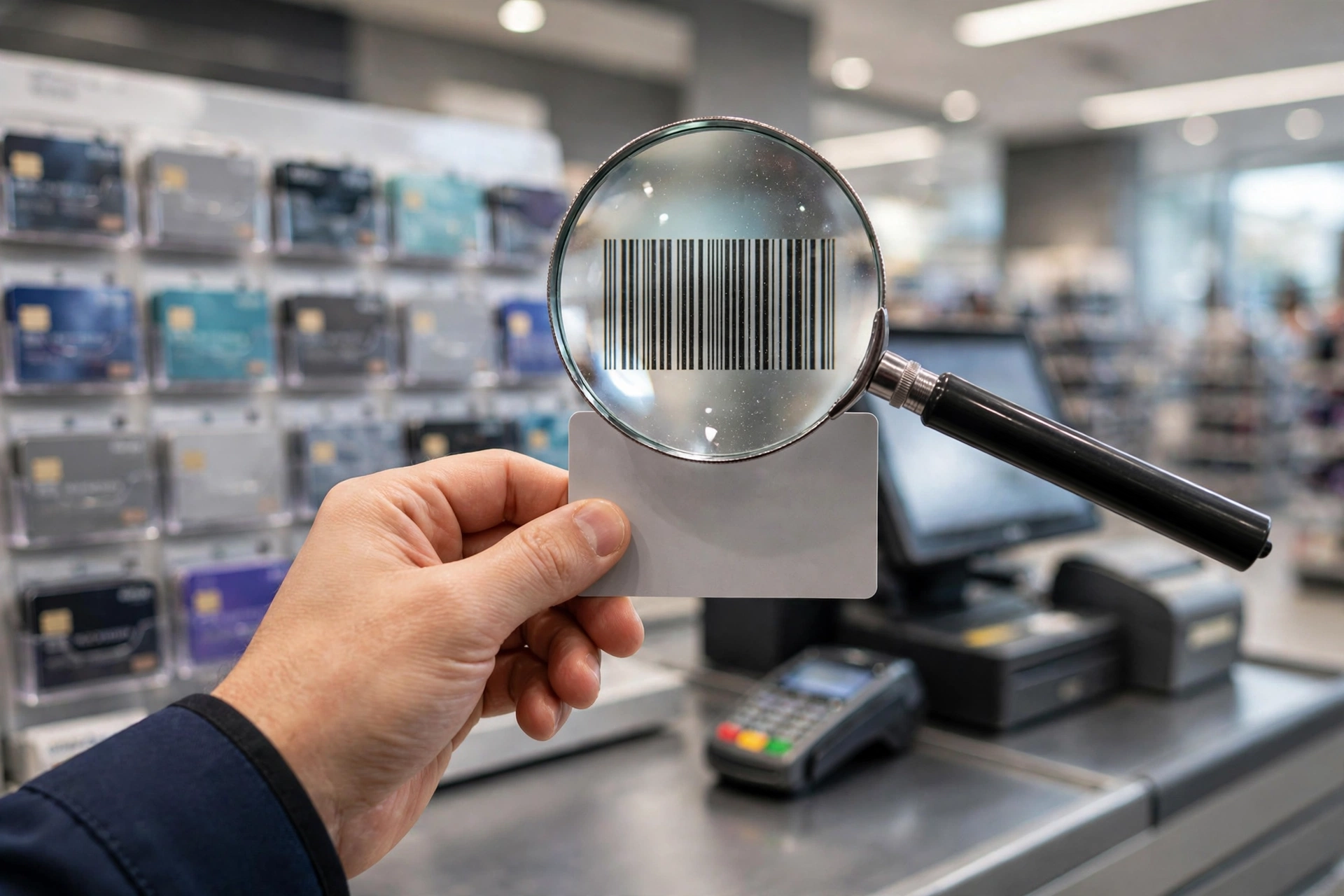
    One of the most common schemes: a fraudster peels the real barcode off a card and replaces it with a barcode from a different card — one that stays in the fraudster’s wallet. At the register, the customer loads money onto the wrong card. Train cashiers to compare the barcode number with the number printed on the card itself, and to stop the sale if a sticker looks bubbled, re-glued, or even slightly off-center. A second set of eyes on an odd-looking card costs thirty seconds; a drained card costs hundreds.

    Watch for tampered packaging

    Scratch-off PIN panels that are already scratched, resealed blister packs, glue residue on the back of the card — all of it means the card data was likely copied before the card ever reached the register. The rule for front-end staff should be simple: pull any suspect card from the rack and hand it to LP. Do not sell it and “see what happens.” Log the card number so LP can check whether it was already drained, and share the pattern with peer stores.

    Bulk buys at the register are a signal, not a coincidence

    Legitimate customers rarely buy ten $500 cards in one transaction. Large-volume or sequential-denomination purchases — especially with cash — are a classic money-laundering and fraud pattern. Set a threshold (for example, any gift card transaction over $500, or multiple cards in one sale) that triggers a receipt review and a supervisor’s initials. Make sure your POS exception reports track gift card velocity by cashier, because internal involvement is a real part of this problem.

    Secure the supply chain inside your own store

    Unactivated cards sitting in an open display are bait. Keep high-denomination cards behind the counter or in locked cases, and run a weekly rack audit: count the cards, check packaging integrity, and confirm the rack matches what the system thinks is on it. Five minutes of audit time costs less than a single drained $500 card.

    Gift card fraud is a process problem, not a people problem. Build the checks into the register routine, train your cashiers once, and audit the rack weekly — and the easiest money in your store stops walking out.

  • What a $1,855 Target Stop Reveals About the Booster Playbook

    What a $1,855 Target Stop Reveals About the Booster Playbook

    Four arrests, 107 items, and a familiar merchandise mix — how organized shoplifters pick their products, and what LP teams should take from it.

    ☕ The Afternoon Coffee Break Read

    On October 5, 2026, a caller spotted what looked like shoplifting at a Target in Newnan, Georgia. Target’s loss prevention manager described four women carrying merchandise past all points of sale and loading it into a gray Kia K4. Responding officers relayed the vehicle description to sheriff’s deputies, who stopped the Kia on Interstate 85. Inside: 107 items worth $1,855.18. All four were arrested.

    Cases like this are textbook organized shoplifting — a group, volume, a vehicle, and a route planned across state lines. This isn’t petty theft. It’s a supply chain, and the merchandise tells you exactly how it works.

    The booster merchandise mix

    Look at what came out of that Kia: 32 apparel items, 46 health and beauty products, 10 home items, 18 laundry, cleaning, and closet products, and one office supply item. That is not a random shopping spree — it is the standard booster shopping list. Health and beauty, consumables, and basics move fast because they are brand-name, sealed, and indistinguishable from legitimate stock once they hit a resale channel.

    The merchandise list matters more than the dollar value

    $1,855 sounds modest until you realize the product profile is a map. Boosters return to the same categories because those categories pay. Run your own merchandise profile: pull booster-related incidents and see which aisles keep showing up, then concentrate surveillance, locked fixtures, and staffing on those categories — not just on the high-ticket items.

    Three takeaways for LP teams

    First, external partnerships win cases. The chain here — a customer call, an LP manager with a sharp description, the vehicle description relayed to responding units, a sheriff’s stop on the interstate — is how merchandise gets recovered and arrests get made. Train associates to give good descriptions fast: vehicle, direction of travel, occupants.

    Second, document the route. Groups moving stolen goods across state lines invite felony-level exposure, and a clean timeline of who went where turns a local shoplifting case into one prosecutors actually want.

    Third, share the merchandise profile with your peers. Booster groups hit multiple retailers on the same circuit; a quick heads-up to neighboring stores about a group’s target categories can be the difference between an apprehension and another loss. (Source: Ghanamma.com / FOX5 Newnan, October 15, 2026)

    A gray Kia, 107 everyday items, and a quick stop on the interstate. Boosters run a business model — LP teams that study the model beat it.

  • The Interview Is the Case: How LP Pros Run a Clean, Defensible Subject Interview

    The Interview Is the Case: How LP Pros Run a Clean, Defensible Subject Interview

    Most shoplifting and employee-theft cases are won or lost in the interview room — not on the sales floor. Here’s how to structure one that holds up.

    ☕ The Afternoon Coffee Break Read

    Most loss prevention cases are not won on the sales floor — they are won or lost in the interview room. The footage shows what happened; the interview determines why, and whether the resolution holds up in court, with HR, and under company policy. A structured interview is one of the highest-leverage skills an LP professional can build.

    Start with a plan, not a question.

    Before the subject sits down, know your objective: admission, restitution amount, co-conspirators, and policy violations. Review the evidence — video, POS data, exception reports — and decide what you can prove without the subject’s help. Never walk in hoping the conversation will tell you what to ask next.

    Lock the room down properly.

    Private, quiet, no interruptions. One door, one LP professional (a second investigator takes notes if available). Phones silenced. Introduce everyone present and their role, state the purpose plainly, and remind the subject that participation is voluntary and they are free to leave. Coercion kills cases — voluntariness protects them.

    Build rapport before you pivot.

    Open with non-threatening, open-ended conversation — how long have they worked here, how do they like the job. Listen more than you talk. The goal is a baseline: tone, posture, and cadence you can compare against later when the questions get hard.

    Present evidence in layers.

    Don’t show your strongest footage first. Start with open-ended questions (“Walk me through your shift yesterday”), then introduce discrepancies one at a time and watch the subject reconcile them with their story. People talk themselves into corners far more effectively than pressure ever could.

    Document contemporaneously.

    Take notes during the interview and write the final report immediately after — while recall is fresh. Record times, exact quotes, admissions, and the subject’s demeanor. Have the subject review and sign a written statement when possible; a signed admission is the single most valuable document in your case file.

    The best interviewers are made, not born. Plan the room, protect voluntariness, layer the evidence, and write it down — and your cases will hold up wherever they go next.


Protecting people, property, & profits