
Author: admin

  • CORCA: The Federal Bill That Could Give ORC Cases Real Teeth

    CORCA: The Federal Bill That Could Give ORC Cases Real Teeth

    The House passed it 348-60 in May and police groups are pushing the Senate — here’s what the Combating Organized Retail Crime Act would mean for LP teams.

    ☕ The Afternoon Coffee Break Read

    Organized retail crime has a prosecution problem: crews that steal in carefully calibrated amounts, across store locations and state lines, knowing that individual incidents rarely meet the threshold for serious charges. A federal bill with rare bipartisan momentum aims to change that.

    The Combating Organized Retail Crime Act — CORCA (S. 1404 / H.R. 2853), led by Senators Chuck Grassley and Catherine Cortez Masto in the Senate and Representatives David Joyce and Susie Lee in the House — would establish an Organized Retail and Supply Chain Crime Coordination Center within Homeland Security Investigations at the Department of Homeland Security. Its job: coordinate investigations and share intelligence among federal, state, and local law enforcement and private-sector partners.

    The bill already cleared the House on May 12, 2026, by a vote of 348 to 60. On October 2, the National Police Association formally endorsed it, urging the Senate to act — the Senate companion remains before the Judiciary Committee and supporters have offered it as an amendment to the FY 2027 National Defense Authorization Act. NPA endorsement (Oct 2, 2026)

    The part LP teams should care about most is the prosecutorial toolkit. CORCA would expand money-laundering statutes, treat certain gift cards as monetary instruments, authorize forfeitures, and — critically — let prosecutors combine the value of multiple smaller thefts over a 12-month period to meet federal charging minimums. That aggregation provision turns the exact pattern ORC crews use to stay under the radar into the basis for a federal case.

    This isn’t theoretical. States are already moving: Georgia’s Organized Retail Crime Unit secured an indictment in September against 11 individuals accused of a four-state, four-year theft enterprise (over $200,000 in losses across Ulta, Bath & Body Works, The Home Depot, and Walmart), and Arizona’s attorney general announced a six-year prison sentence on October 9 for a Lowe’s theft ring. Georgia ORC indictment | Arizona sentencing

    What LP leaders should do now:

    1. Document with aggregation in mind. If prosecutors can combine incidents across a year, your case files become the raw material for federal cases. Tie incidents to individuals and networks, not just stores — names, descriptions, vehicles, and shared MOs across your locations.

    2. Track gift card fraud carefully. If gift cards become monetary instruments under federal law, gift card fraud cases carry significantly more weight. Make sure gift card theft and tampering incidents are logged consistently and linked to suspects.

    3. Build the law enforcement relationship before you need it. A federal coordination center only works if information flows into it. Meet your local HSI contacts and ORC task forces now — don’t wait for a bill to become law.

    4. Watch the NDAA. Supporters are pushing CORCA as an amendment to the defense authorization bill, which moves every year. If it lands there, expect HSI to start reaching out to retail partners quickly.

    ORC crews count on every incident being treated as an isolated event. CORCA’s whole premise is that they aren’t — and the LP teams documenting the pattern are the ones who’ll feed it.

  • Return Fraud: The Red Flags Your Front End Is Missing

    Return Fraud: The Red Flags Your Front End Is Missing

    Wardrobing, receipt fraud, and organized return abuse — what LP teams should watch at the return desk.

    ☕ The Afternoon Coffee Break Read

    Return fraud rarely looks like theft at the register. It looks like a polite customer with a smile and a receipt — which is exactly why it keeps growing while LP attention stays fixed on the sales floor. The return desk is where shrink hides in plain sight.

    Industry research has put U.S. return fraud losses above $100 billion a year, and the tactics keep evolving: wardrobing (buy, wear, return), stolen merchandise “returned” for store credit, receipt-switch fraud, and organized groups cycling goods through multiple stores for cash refunds. The common thread: the transaction looks legitimate at the desk, so nobody investigates it.

    Five red flags every front-end and LP team should watch:

    1. No-receipt returns that spike at one register. A single associate processing a cluster of no-receipt or “lost receipt” returns is a pattern, not a coincidence. Track the associate, not just the customer.

    2. The same ID tied to repeated high-value returns. Shoppers who return frequently at full ticket price with no purchase history in your loyalty system deserve a second look. Set a dollar threshold and review the pattern weekly.

    3. Wardrobing tells. Tags reattached with a tagging gun, missing hygiene stickers, worn soles, stretched seams, fragrance or deodorant on “unworn” garments — train return-desk associates to inspect the item before they scan the receipt. A 30-second inspection beats a post-transaction investigation every time.

    4. Receipts that don’t match the merchandise. Serial numbers, SKUs, or color codes that differ between the receipt and the item in hand are a classic switch fraud. Verify at the desk, not after the customer leaves.

    5. Refund tender manipulation. Watch the cycle: store credit issued and immediately used to buy high-resale merchandise, or cash refunds requested on returns originally paid by gift card. Organized groups use these loops to convert stolen goods into cash.

    The operational fix is straightforward: give return-desk associates the authority to slow down a suspicious transaction, put ID-verification rules on high-risk tenders, and feed return exceptions into the same reporting review as your POS exceptions. Return fraud thrives on one assumption — that returns are customer service, not loss prevention. Change the assumption and you change the numbers.

    The return desk isn’t the back door of your shrink problem. It’s the front door — and it’s been propped open.

  • The Real Cost of a False Alarm

    The Real Cost of a False Alarm

    A new Interface Systems report puts hard numbers on alarm failures — and the police non-response risk hiding behind them.

    ☕ The Afternoon Coffee Break Read

    Your alarm goes off at 2 a.m. Nobody’s inside. The police roll, the keyholder gets out of bed, and everyone goes home. Annoying — but how much did that one non-event actually cost you?

    Interface Systems published a new report this week, “The Real Cost of Alarm Failure,” and the numbers belong on every LP leader’s desk. Modeling a standard 10-store retailer averaging three false alarms per location per year, the study puts direct municipal fines at just $1,220 annually. That sounds manageable — until you add the costs nobody budgets for: unverified guard dispatches, manager keyholder callouts, and lost labor hours. The real baseline: $7,230 a year, quietly eroding the safety budget.

    And that’s the good scenario. Here’s the number that should change your alarm program: in 21 of the 23 major cities analyzed — including Los Angeles, San Francisco, and Houston — police departments now suspend or revoke emergency dispatch privileges for properties that exceed a set number of false alarms. One break-in at a location that has lost its police response pushes the modeled annual exposure for that 10-store operator to $37,230.

    The study draws on municipal ordinances and fee schedules across 25 U.S. cities, police dispatch policies in 23 cities, federal labor data, and real vendor repair costs — so these aren’t scare tactics, they’re invoices.

    Three practical takeaways:

    1. Audit what your alarms cost you, not just whether they work. Pull a year of alarm events per location: false alarm counts, guard dispatches, keyholder callouts, fines paid. Most LP teams have never seen that total in one place.

    2. Fix the repeat offenders first. A handful of locations usually generate most false alarms — bad door contacts, motion sensors tripped by HVAC, user error at open and close. Targeted repair beats a blanket service contract.

    3. Protect your dispatch privileges like an asset. Know each municipality’s false-alarm ordinance and your locations’ current standing. Verified-response programs and video-verified alarms aren’t just technology upgrades — they’re insurance against the day a real break-in gets no police response.

    An alarm that cries wolf doesn’t just waste a night’s sleep. It erodes the one response you actually need when it matters.

    Source: Interface Systems, “The Real Cost of Alarm Failure,” 2026 Loss Prevention Research Series, published Oct 8, 2026 — https://www.globenewswire.com/news-release/2026/10/08/3377413/0/en/new-loss-prevention-report-by-interface-systems-exposes-the-hidden-cost-of-commercial-false-alarms.html

  • Five Things LP Teams Should Do Before Black Friday

    Five Things LP Teams Should Do Before Black Friday

    Shrink doesn’t start in December. The controls you fix in October decide how November goes.

    ☕ The Afternoon Coffee Break Read

    Shrink doesn’t start in December. By the time Black Friday arrives, seasonal staff are hired, the floor is reset, and whatever controls you fixed in October are the ones protecting your holiday numbers. The preparation window is open now — and it’s short.

    Here are five moves LP teams should make before the holiday rush:

    1. Audit your EAS and alarm systems now. Walk every exit. Don’t assume tag readers, door alarms, and panic hardware work — test them. An exit alarm that’s been silent for six months will fail silently again on the busiest week of the year. Log every fault and escalate repairs before the holiday maintenance queue fills up.

    2. Train seasonal hires before their first shift. Seasonal employees are your highest-risk population for internal theft — not because they’re dishonest, but because they’re untrained and new to the rules. Schedule the LP orientation before day one, not after the first incident. Cover the refund policy, bag checks, discount rules, and exactly what happens when policy is violated.

    3. Lock down receiving and the stockroom. Holiday inventory spikes mean your stockroom holds more value than at any other point in the year — and back doors get propped open more often in the rush. Enforce door discipline: no propped doors, badge-only access, and a written log of who holds stockroom keys.

    4. Adjust your exception thresholds for the season. Holiday volume inflates every metric. If your exception-based reporting thresholds stay at October levels through December, you’ll drown in false positives and miss the real fraud. Set seasonal baselines now, and have a plan for who reviews exceptions when volume triples.

    5. Do a perimeter and CCTV sweep. Holiday floor resets change sightlines. Check that cameras still cover high-value zones, that fitting rooms are properly staffed, and that sightline-blocking displays get a mirror or a camera added. A store reset that blocks your best camera angle is a gift to shoplifters.

    One more thing: brief store managers on organized retail crime indicators before the season starts. Holiday traffic is cover — organized groups use the crowds to run booster operations. A one-meeting ORC refresher costs almost nothing and pays for itself with a single good apprehension.

    October preparation is November profit protection. The teams that walk into Black Friday with tested alarms, trained seasonals, and tuned exceptions don’t just survive the holidays — they post the best shrink numbers of the year.

  • Shrinkage 101: A Plain-English Guide for Small and Mid-Size Retailers

    Shrinkage 101: A Plain-English Guide for Small and Mid-Size Retailers

    What shrink is, where it comes from, and the first five things to do about it.

    Shrinkage is the polite industry word for inventory that disappears without being sold. Every retailer has it. The difference between healthy businesses and struggling ones isn’t whether shrink exists — it’s whether anyone is measuring it and doing something about it. This guide is for owners and managers who know shrink is a problem but aren’t sure where to start.

    Let’s define it simply. Shrink is the gap between the inventory your books say you should have and the inventory you actually have. It’s expressed as a percentage of retail sales. Industry averages hover around 1.5 to 2 percent, which sounds small until you translate it: on $2 million in annual sales, 2 percent shrink is $40,000 walking out the door every year. That’s a full-time employee’s salary, gone.

    Shrink comes from four sources, and you need to know all four because they require different fixes:

    1. Shoplifting (external theft). Customers stealing merchandise. This is the source everyone thinks of first, and it typically accounts for roughly a third of total shrink.

    2. Employee theft (internal theft). Staff stealing cash or merchandise, manipulating discounts, or abusing refunds. Also roughly a third — and each incident costs significantly more on average than a shoplifting case.

    3. Administrative and paperwork errors. Receiving mistakes, pricing errors, missed markdowns, inventory miscounts. Not theft, but it shows up as shrink all the same. This is the source most small retailers underestimate.

    4. Vendor fraud and receiving errors. Short shipments, billing for goods never delivered, driver or delivery-person theft. If you’re not verifying what’s on the truck against what’s on the invoice, you’re exposed.

    Before you fix anything, measure. Run a full physical inventory and compare it against your book inventory to establish your shrink rate. If you can’t do a full count, start with cycle counts on your highest-value categories. You can’t manage what you don’t measure, and guessing at shrink is how retailers spend money on the wrong solutions.

    Once you know your number, here are the first five steps:

    Step 1: Lock down receiving. Verify every delivery against the purchase order before the driver leaves. Count it, check it, sign for what’s actually there. This single discipline eliminates a huge share of vendor-related shrink and it’s free.

    Step 2: Control discounts, voids, and returns. Require manager approval for every void, return without receipt, and employee discount. Most internal theft flows through these three transaction types. The policy costs nothing; the approval takes seconds.

    Step 3: Know your top ten. Identify the ten SKUs with the highest loss and give them special attention — locked cases, keeper boxes, behind-counter placement, or at minimum a dedicated camera. A small number of products usually drives a large share of theft.

    Step 4: Train your team on awareness, not accusations. Teach every associate what suspicious behavior looks like and how to report it. Customer service is itself a deterrent — a thief who gets greeted, offered help, and watched is a thief who often puts the merchandise back.

    Step 5: Review your numbers monthly. Shrink isn’t a once-a-year inventory event; it’s a monthly management metric. Track it by category, look for trends, and adjust. What gets measured gets managed.

    You don’t need an enterprise LP department to get shrink under control. You need measurement, basic controls, and consistent follow-through. Start with these five steps, and you’ll recover more margin than most retailers think possible.

    If shrink is eating your margins and you’re not sure where it’s going, a professional assessment finds the leaks fast. Robert John Bonus Consulting offers security assessments, loss prevention strategy, and training and certification for retail teams — visit rjbonusconsulting.com to get started.

  • CCTV That Actually Prevents Loss: Camera Placement and Practices That Work

    CCTV That Actually Prevents Loss: Camera Placement and Practices That Work

    Most stores have cameras. Far fewer have cameras that do any good.

    Walk into almost any retail store and you’ll see cameras on the ceiling. What you won’t see is whether anyone thought carefully about where they point, what they can actually resolve, or whether the footage is ever used for anything beyond post-incident review. A camera system that only documents losses after they happen isn’t preventing anything — it’s just producing evidence of failure.

    Effective camera placement starts with the money. The point of sale is your highest-value coverage zone: every transaction, every void, every discount, every sweetheart deal happens here. Cameras over registers need to capture both the associate’s hands and the customer’s, with enough resolution to read denominations and see product movement. If your POS cameras can’t clearly show what changed hands, they’re decoration.

    Next, cover the exits — all of them, including the receiving doors and emergency exits. Push-out theft and ORC crews rely on fast exits with full carts; a camera that captures faces and vehicle details at the door is worth more than three cameras watching empty aisles. Entrances matter too, but for a different reason: they establish who was in the building and when, which is essential for investigations.

    High-value displays and known theft hotspots come third. Your data should tell you which SKUs walk out the door — cosmetics, razor blades, electronics, baby formula. Aim dedicated cameras at those fixtures, not just general aisle coverage. Stockrooms and cash offices need coverage as well; internal theft investigations live or die on whether you can see what happened behind the sales floor.

    Resolution and lighting are where most systems quietly fail. A camera pointed at the right spot with the wrong lens is useless. Match the lens to the distance: wide-angle for overview, narrow for identification. And check your lighting — cameras facing windows or bright entryways will silhouette every face into an unrecognizable shadow. Walk the store at different times of day and look at the actual monitor feeds, not the spec sheet. What you see on the monitor is what you’ll have when it matters.

    The biggest upgrade most retailers can make isn’t more cameras — it’s pairing the cameras they have with exception-based reporting. EBR flags the suspicious transactions; cameras confirm or clear them. A void at register three at 2:14 PM becomes a thirty-second video review instead of a week-long investigation. Without that pairing, you’re asking LP staff to watch hours of footage hoping to get lucky. Nobody has time for that, so it doesn’t happen.

    A few common mistakes to avoid. Don’t mount cameras so high that every face is a forehead — mounting height should serve identification, not just coverage. Don’t forget the parking lot and loading dock; cargo and vehicle-related theft starts outside your four walls. Don’t let cameras drift out of alignment after maintenance or remodeling — schedule a quarterly walk-through to verify every camera still points where it was intended to. And don’t treat the system as install-and-forget: firmware updates, storage capacity checks, and retention policies need regular attention.

    Cameras are a tool, not a strategy. Placed with intent, maintained with discipline, and paired with transaction data, they become one of the highest-ROI investments in your loss prevention program.

    Not sure your camera layout is pulling its weight? Robert John Bonus Consulting conducts security assessments that evaluate camera coverage, placement, and integration with your LP program — plus training and certification for your team. Learn more at rjbonusconsulting.com.

  • Internal Theft: The Red Flags Most Managers Miss

    Internal Theft: The Red Flags Most Managers Miss

    Your biggest shrink risk isn’t walking through the front door — it’s already on the schedule.

    Ask most retail managers where their losses come from and they’ll point at shoplifters. The data tells a different story. Industry research has consistently shown that employee theft accounts for roughly a third of retail shrink — often more than shoplifting — and each internal case costs far more on average than an external one. A shoplifter steals a product; a dishonest employee can steal for months, manipulating the very systems meant to catch them.

    The uncomfortable truth is that internal theft rarely looks like theft. It looks like a trusted associate, a top performer, someone who’s been there for years. That’s exactly why the red flags get missed — managers don’t want to believe it, and the behaviors are easy to rationalize away.

    Start with the POS patterns, because that’s where the money moves. Watch for excessive voids and returns processed without a customer present, especially by the same associate. Discount abuse — unauthorized markdowns for friends or “sweethearting” at self-checkout — is one of the most common schemes. Refunds issued to gift cards or cash without corresponding merchandise are another classic. Exception-based reporting software exists precisely to surface these patterns; if you’re not reviewing EBR reports weekly at minimum, you’re flying blind.

    Then there are the behavioral red flags. An employee who never takes a vacation or refuses to let anyone else close their register may be protecting a scheme that requires their constant presence. Sudden lifestyle changes — a new car, expensive purchases on a retail wage — deserve attention, not accusations. Defensiveness about routine audits, reluctance to follow cash-handling procedures, and spending unusual time in stockrooms or near the safe are all signals worth noting. None of these prove anything alone. Together, they form a picture.

    Here’s where most managers go wrong: they either ignore the signs or launch an aggressive confrontation that poisons the workplace. There’s a better way. Build your case quietly and methodically. Review POS data, check video against transaction records, and document everything before you ever speak to the employee. When you do interview, use a professional, non-accusatory approach — state the facts you’ve observed and give them a chance to explain. Many internal investigations resolve with a confession when the evidence is laid out calmly and completely.

    Prevention matters more than prosecution. Anonymous tip lines work — a meaningful share of internal cases are uncovered because a coworker spoke up. Make sure your team knows the tip line exists, trusts that it’s truly anonymous, and has seen it lead to action. Rotate register assignments so no one person permanently controls a drawer. Enforce the unglamorous basics: bag checks, consistent discount policies, and manager approvals on voids and returns. Controls that feel like bureaucracy are the ones that stop the quiet, long-running thefts.

    One more thing: protect the culture while you protect the assets. The goal is a workplace where honest employees feel trusted and dishonest ones feel watched. Blanket suspicion destroys morale and drives good people out. Targeted, data-driven investigation protects everyone — including the employees who deserve to work somewhere theft isn’t tolerated.

    Employee theft is the hardest shrink to see from the inside. Robert John Bonus Consulting provides confidential security assessments, internal investigation guidance, and loss prevention training for your team — visit rjbonusconsulting.com to start the conversation.

  • Organized Retail Crime: What Every Retailer Needs to Know in 2026

    Organized Retail Crime: What Every Retailer Needs to Know in 2026

    Boosters, fences, and online resale — how professional theft crews operate and what you can do about it.

    Shoplifting used to be a crime of opportunity: one person, one item, one bad decision. Organized retail crime is something else entirely. ORC is theft as a business — coordinated crews, planned targets, and resale channels that turn stolen merchandise into cash at industrial scale. If your loss prevention program still treats every theft like an isolated incident, you’re fighting the wrong fight.

    Here’s how the operation typically works. The “boosters” are the people who walk into stores and steal. They aren’t random — they’re assigned hit lists of specific high-value, easy-to-resell products: razor blades, cosmetics, baby formula, over-the-counter medications, designer handbags, power tools. They work in teams, often hitting multiple locations of the same chain in a single day, using distraction, push-out carts loaded with merchandise, or simply overwhelming short-staffed stores during peak hours.

    The stolen goods flow to “fences” — middlemen who buy in bulk, repackage, and resell. The fence is the engine of the whole enterprise. Some operate out of storage units or flea markets; the sophisticated ones run polished online storefronts on major marketplaces, where stolen products blend invisibly into legitimate inventory. This is why ORC is growing: e-commerce gave fences a frictionless, nationwide distribution channel with near-zero overhead.

    Three forces are driving the surge. First, resale is easier than ever — a booster can convert product to cash within hours. Second, many jurisdictions have raised felony theft thresholds or deprioritized prosecution, lowering the risk side of the equation. Third, staffing shortages mean fewer eyes on the sales floor and slower response times, which professional crews exploit deliberately.

    So what actually works against it? Four countermeasures, in order of impact:

    1. Share intelligence, not just incidents. Join your regional ORC association or retail crime intelligence network. A crew hitting your stores on Tuesday is hitting someone else’s on Wednesday. Photographs, vehicle descriptions, and product lists shared across retailers and law enforcement turn isolated incidents into prosecutable patterns.

    2. Harden the target products. Locking cases, keeper boxes, and behind-counter placement for the top ten most-stolen SKUs removes the profit motive. Yes, it adds friction for legitimate shoppers — but losing the product entirely is worse friction. Test and measure; most retailers find the sales impact is far smaller than feared.

    3. Train for recognition, not confrontation. Teach associates to spot the behaviors — multiple people entering together and splitting up, repeated visits without purchases, oversized bags or clothing, focus on high-value aisles — and to report, not engage. Professional crews can be dangerous. The goal is intelligence gathering and deterrence through visible awareness, never a physical confrontation.

    4. Prosecute the fence, not just the booster. Work with law enforcement to follow the product upstream. Arresting a booster removes one thief for a day; dismantling a fence disrupts the economics for every crew it supplied. This is where your incident reports, video evidence, and product serialization pay off.

    ORC isn’t going away. But retailers who treat it as an organized business problem — with intelligence, target hardening, and upstream enforcement — shrink it from an existential threat to a managed cost.

    If ORC is hitting your stores, an outside assessment can spot the vulnerabilities your team walks past every day. Robert John Bonus Consulting offers security assessments, loss prevention strategy, and professional training and certification — learn more at rjbonusconsulting.com.

  • AI Theft Detection at Self-Checkout Goes Mainstream

    AI Theft Detection at Self-Checkout Goes Mainstream

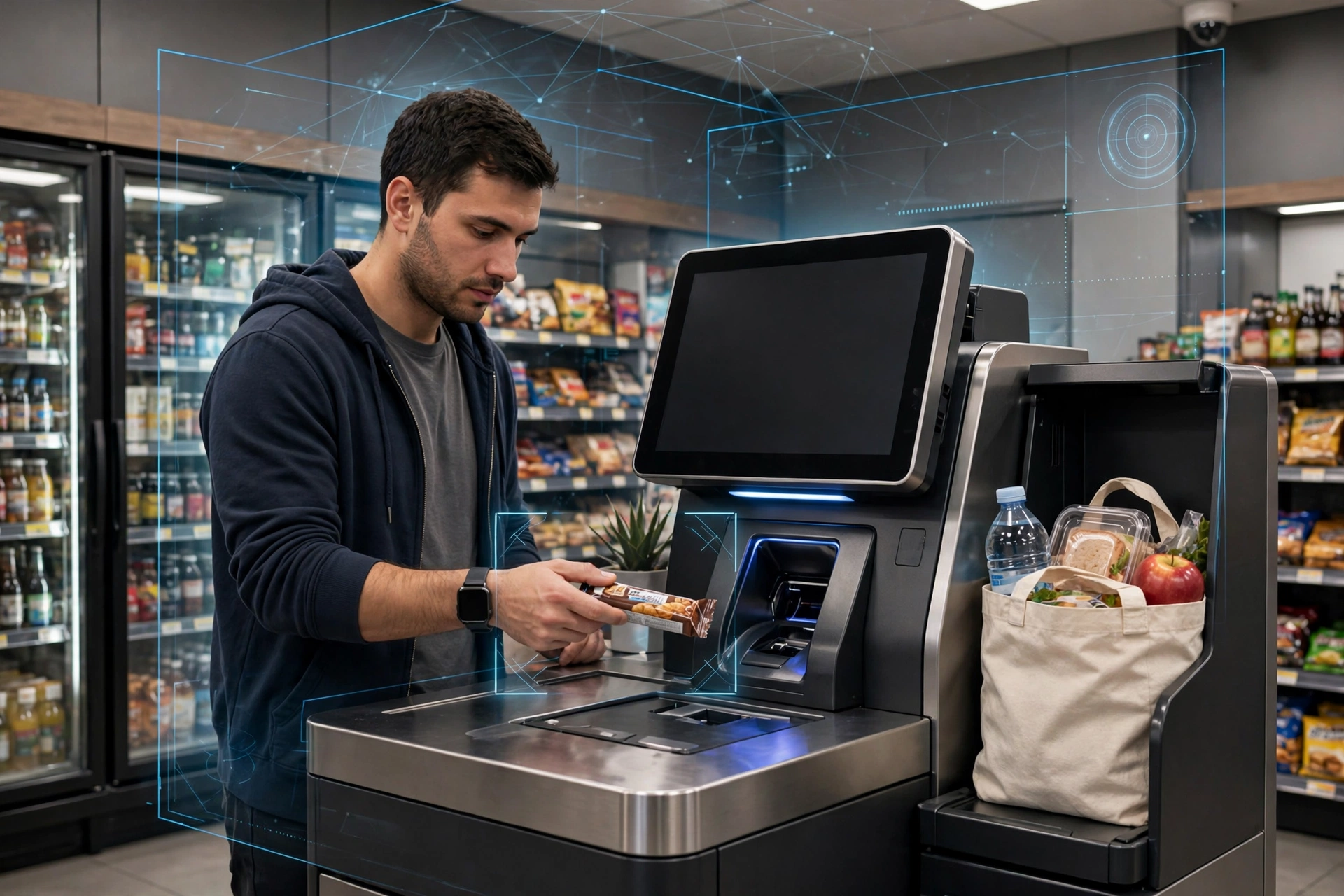
    With Partner Tech’s Verifone Commander certification and Scandit’s loss-prevention debut, computer-vision theft detection is moving from pilot to standard equipment.

    Two announcements, one month apart, signal that AI-powered theft detection at self-checkout is graduating from pilot programs to mainstream retail infrastructure. If you run loss prevention, this is the moment to pay attention.

    Partner Tech announced that its AI-powered self-checkout platform — built with real-time theft prevention — earned certification for integration with Verifone Commander, the leading site controller and point-of-sale platform for fuel and convenience retailers. The certification opens the door to deployment across more than 55,000 fuel and convenience sites in North America — roughly 45% of all U.S. fuel and convenience stores.

    The practical detail matters: retailers can add Partner Tech’s self-checkout terminals alongside their existing Verifone Commander C18 terminals without ripping out payment, fueling, loyalty, and store management infrastructure. The platform’s loss prevention capabilities include AI-powered theft detection with real-time transaction monitoring, computer-vision item recognition, security scale, live video, and age verification support. LP tech that rides the infrastructure you already own gets adopted faster — this deal is the textbook example.

    The second signal came when Scandit entered the loss prevention market outright with a software-first Self-Checkout Loss Prevention solution. It targets the known loss patterns every LP leader recognizes: missed scans, intentionally skipped items, left-in-trolley, and abandoned transactions. The solution deploys as a per-station architecture with no dedicated servers and no purpose-built AI hardware — it works with existing camera infrastructure, whether built-in, off-the-shelf, or standard security cameras above the station.

    What stands out for practitioners: Scandit’s approach processes video on the station and analyzes items and transaction activity only — no facial or biometric identification required. Privacy-by-design isn’t just good ethics; it removes an entire layer of regulatory friction.

    Here’s what it means for the field:

    1. You can’t hire your way out of SCO loss. Missed scans and skip-scanning happen at the station, one lane at a time. Technology that intervenes in real time is the scalable answer — and the market is now converging on it.
    2. Intervention design is everything. A detection that fires three seconds too late produces a confused customer and a staff scramble. When you evaluate vendors, test detection-to-intervention timing, not just detection accuracy.
    3. Audit trails still matter. Real-time monitoring has to log events in ways your LP team can investigate, measure, and report. Ask vendors how detection events export into your case management workflow.
    4. Watch the adoption curve. When AI self-checkout security certifies against platforms running in nearly half of U.S. fuel and convenience stores, it’s not a pilot anymore. Budget accordingly.

    For LP leaders planning 2027, self-checkout AI has moved off the “someday” list.

    Sources: Partner Tech announcement (Oct 5, 2026); Scandit loss prevention launch (Sept 2026).


    Evaluating self-checkout technology for your stores? Robert John Bonus Consulting helps retailers assess LP tech, design rollout plans, and measure results. Contact us.


Protecting people, property, & profits