
A fictitious pickup in Torrance cost a warehouse half a million dollars in product — and the whole shipment was recovered. The lesson is at the dock door, not in the recovery.
Los Angeles County Sheriff’s Department detectives announced on October 27, 2026, that they had recovered approximately $500,000 in SIG Sauer firearm parts and accessories taken in a fictitious pickup from a warehouse near Torrance, California. The entire shipment was returned to its owner, and two men were arrested on suspicion of grand theft cargo. For loss prevention and supply chain security teams, the recovery is the good news. The bad news is how easily the loss happened in the first place: freight was released to someone who was not authorized to take it.
Investigators have not yet explained publicly how the fictitious pickup was carried out, which transportation provider was impersonated, or how the shipment was tracked down. That gap is itself instructive. LP teams should not wait for the full case study to harden their own pickup procedures, because the pattern behind this case is well documented. In Southern California, the region around Torrance accounted for 37% of reported U.S. cargo theft incidents in the surrounding 200-mile area, according to an Overhaul report cited by FreightWaves, and deceptive pickups represented 28% of cases in the region. This is not a rare trick. It is a routine one.
Verify independently, not from the paperwork at the door
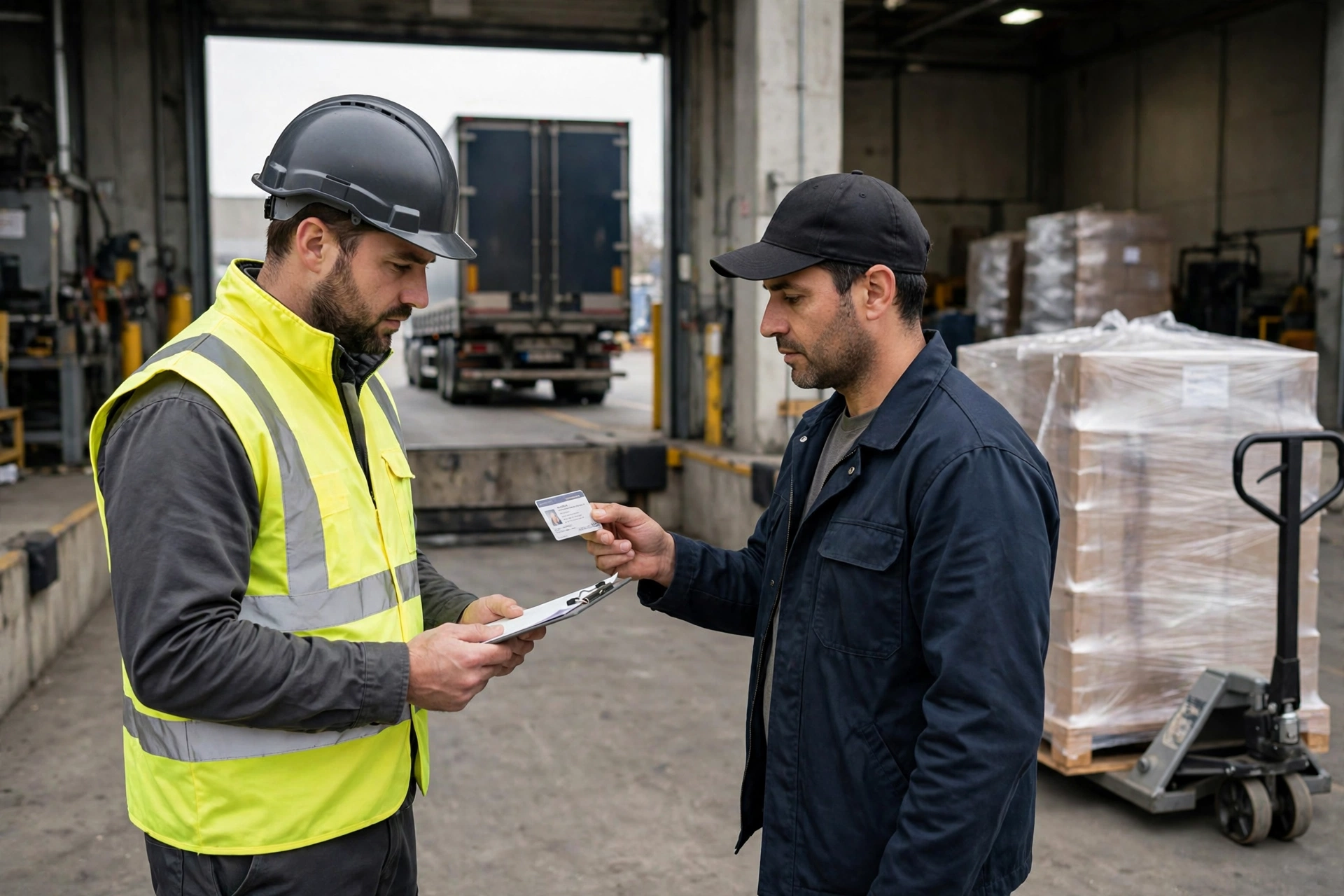
Before freight leaves the dock, someone other than the driver should confirm the pickup against a source the driver did not provide: the carrier assignment on file, a pickup number confirmed with the shipper or broker through a known contact, and the tractor and trailer details. A bill of lading handed to you at the door proves only that someone printed a bill of lading. In a separate Southern California case involving roughly $70,000 in beer shipments taken from an Anheuser-Busch distribution center, detectives identified discrepancies involving the trucking company, the driver, and the vehicles. Any one of those mismatches should stop a release, not start a negotiation.
Treat high-value freight as a different tier
A shipment of firearm parts deserves more than the standard dock routine: pre-registered pickups, photo identification checked against the assignment, equipment numbers recorded, and a supervisor sign-off before the doors close. The extra two minutes at the dock are cheap compared with a half-million-dollar loss and a criminal investigation.
Document the handoff so investigators can use it
Log who picked up the load, when, in what equipment, under which pickup number, with seal numbers and photos where your procedure allows. When a case lands with a specialized unit like the Sheriff’s Cargo Criminal Apprehension Team, that record is often the difference between a fast recovery and a cold trail.
Share the attempt, not just the loss
Fictitious pickups work because each warehouse treats its dock as an island. Regional task forces, industry groups, and neighboring facilities all benefit when a near-miss or a suspicious pickup attempt is reported the same day, with carrier names, equipment descriptions, and document details attached. The Torrance recovery shows law enforcement can close these cases. It does not show that recovery is a strategy.
The dock door is a loss prevention post. Staff it like one, verify every pickup like the load depends on it — because it does.
Source: FreightWaves, “$500,000 SIG Sauer shipment stolen in fictitious pickup, two arrested in California,” published October 29, 2026.


Leave a Reply