
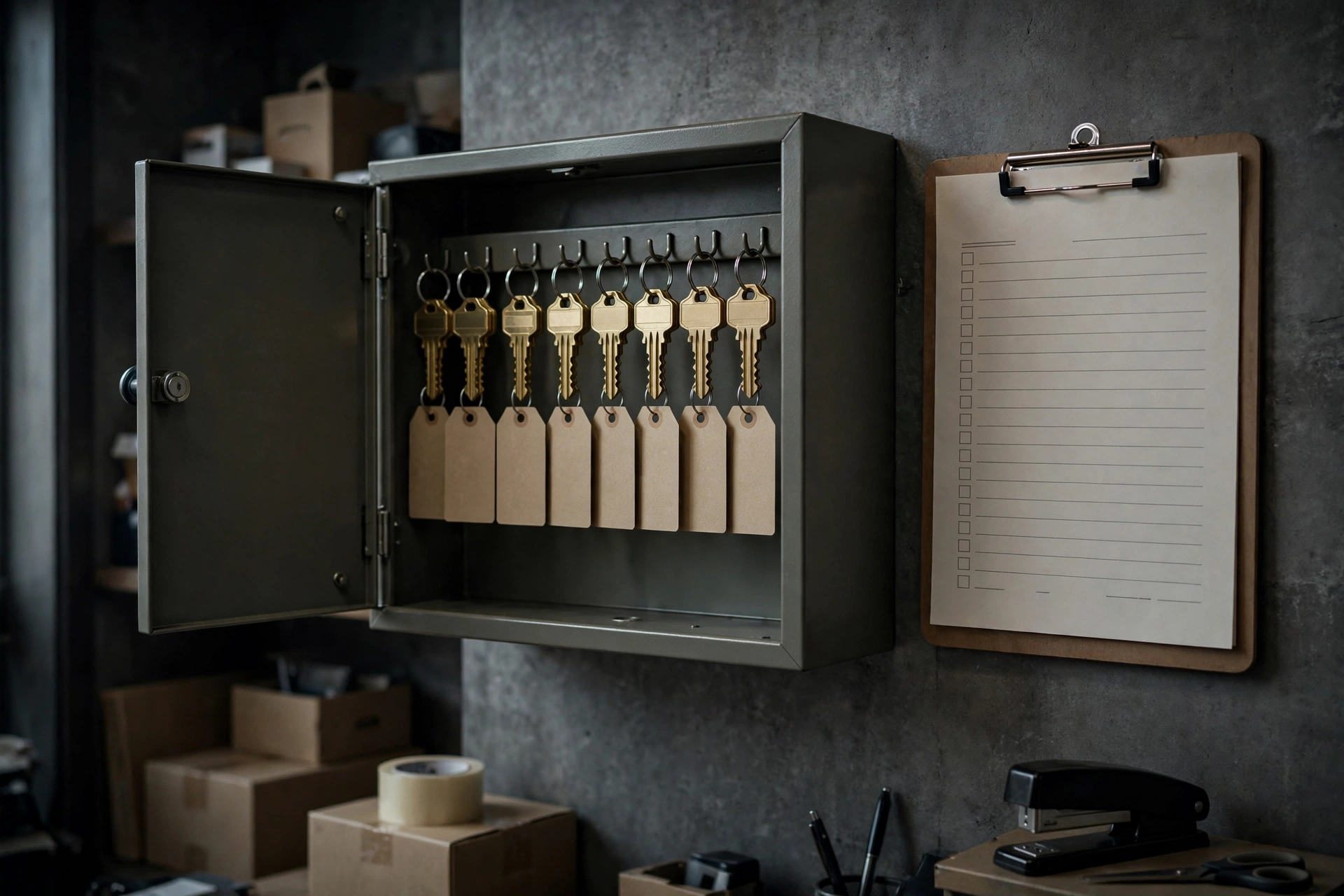
A missing master key can cost more than a shoplifting ring. Tighten who holds keys, how they’re tracked, and what happens when someone leaves.
Ask a loss prevention manager where their shrink comes from and you’ll hear about shoplifting, organized retail crime, and return fraud. Ask where their keys are, and you’ll often get a pause. That pause is the problem. A single unaccounted master key gives someone quiet, after-hours access to the stockroom, the cash office, and the safe — no forced entry, no alarm, no footage of a break-in. Key control is loss prevention, and most stores treat it as a facilities afterthought.
Here are five controls that close the gap.
1. Number every key and log every handoff. Each key should carry a stamped number tied to a record: who holds it, which doors it opens, and when it was issued. Sign-outs go in a log, not on memory. If you can’t produce a current list of key holders in five minutes, you don’t have key control — you have key hope.
2. Separate the person who issues keys from the person who audits them. When the same manager hands out keys and checks the log, discrepancies have a way of never surfacing. A monthly spot check by someone outside the key-issuing chain catches the quiet drift: the key lent to a contractor and never returned, the duplicate made “just in case.”
3. Make key return part of the termination checklist — same day, no exceptions. Every LP professional has a story about a former employee who kept a stockroom key for weeks because nobody asked for it. The exit procedure should name key collection explicitly, and any unreturned key should trigger a rekey decision within 24 hours, not at the next remodel.
4. Audit physically, not just on paper. Once a quarter, count the keys in hand against the log, test a sample against the doors they’re supposed to open, and look for the telltale signs of unauthorized duplication: shiny new copies, keys without stamped numbers, blanks that don’t match your keyway. Paper audits confirm the log matches itself. Physical audits confirm the log matches reality.
5. Control duplication at the source. Use restricted keyways that a hardware store can’t copy, and authorize exactly one locksmith vendor to cut keys for your locations. If any employee can walk into a key kiosk with a stockroom key, your log is fiction. Restricted keyways cost more upfront; one after-hours internal theft costs far more.
Two more habits round out the program. Treat vendor and contractor keys as temporary by default — issued for the job, collected at the end of the day, never left in a lockbox with a shared code that hasn’t changed in three years. And treat the cash-office and safe keys as a separate tier: fewer holders, stricter logging, and immediate rekeying when a holder’s role changes.
None of this requires new technology. It requires treating keys like what they are: credentials. You wouldn’t hand out alarm codes without a record and leave them active after someone quits. Keys deserve the same discipline — because the most expensive theft in your store may be the one that walks in through a door that was never forced open.


Leave a Reply